Full-Funnel Profit Modeling for 2026: Integrating FBA Fees, TACoS, and Aged Inventory Surcharges By Muhammad Shahbaz | P4Product.com
Last Updated: March 09, 2026
All data and formulas below are based on official Amazon Seller Central policies effective January 15–16, 2026. These are estimates using public benchmarks. Actual profitability depends on your exact product dimensions, sales velocity, ad performance, and account data. This is not financial, investment, tax, or legal advice. Always verify in Seller Central and consult qualified professionals. Model your own SKUs instantly with our free Profit Engine at p4product.com.
Most sellers still calculate “profit” as Sale Price – COGS – FBA Fee. In 2026 that approach is dangerously incomplete. Amazon’s $0.08 average FBA fee increase, Meta’s Andromeda-driven advertising shifts, and the sharper aged-inventory cliffs mean true profitability now requires full-funnel modeling — every dollar from ad spend to final margin, including TACoS, Low-Inventory-Level fees, and monthly aged surcharges.
Sellers using integrated models protect 8–15% more margin than those who don’t.


Amazon FBA fulfillment centers — every pallet sitting longer than 180 days starts costing you extra every single month.
The Three Hidden Leaks in 2026 Profitability
1. FBA Fulfillment Fees (Granular by Price Tier) Average +$0.08 per unit, but up to +$0.51 on items >$50. Low-price (<$10) items get bigger discounts.
2. TACoS (Total Advertising Cost of Sales) Post-Andromeda, creative diversity and landing-page relevance now drive efficiency. Poor signals push TACoS from 10–15% to 25%+.
3. Aged Inventory Surcharges Monthly assessments on the 15th. Fees escalate dramatically after 270 days and again after 366 days.
The Complete 2026 Full-Funnel Profit Formula
Where:
- P P = Selling Price
- C C = Cost of Goods Sold (including inbound freight)
- Fbase F_{\text{base}} = Standard FBA fulfillment fee
- Fgranular F_{\text{granular}} = Price-tier or SIPP penalties
- Saged S_{\text{aged}} = Monthly aged surcharge (per cu ft or min per unit)
- Atotal A_{\text{total}} = Total ad spend ÷ units sold (TACoS)
- R R = Referral fee (~15%)
- LLIL L_{\text{LIL}} = Low-Inventory-Level fee (if applicable)
Our Profit Engine calculates this live, factoring in all 2026 variables.
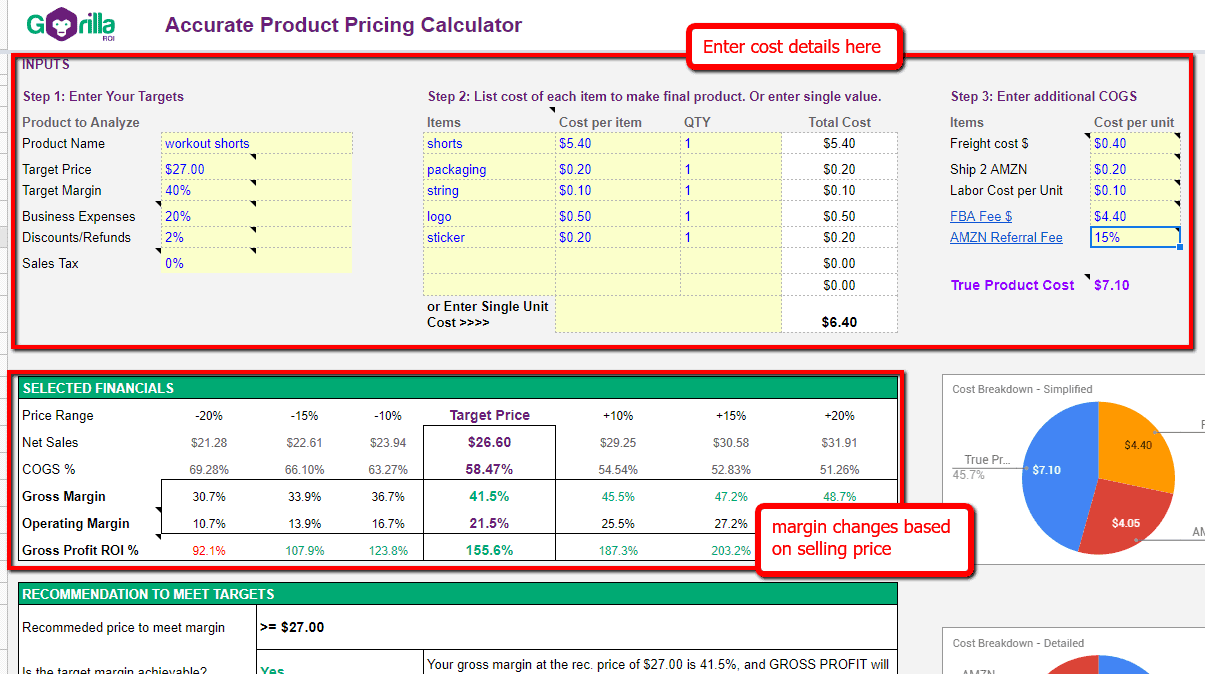
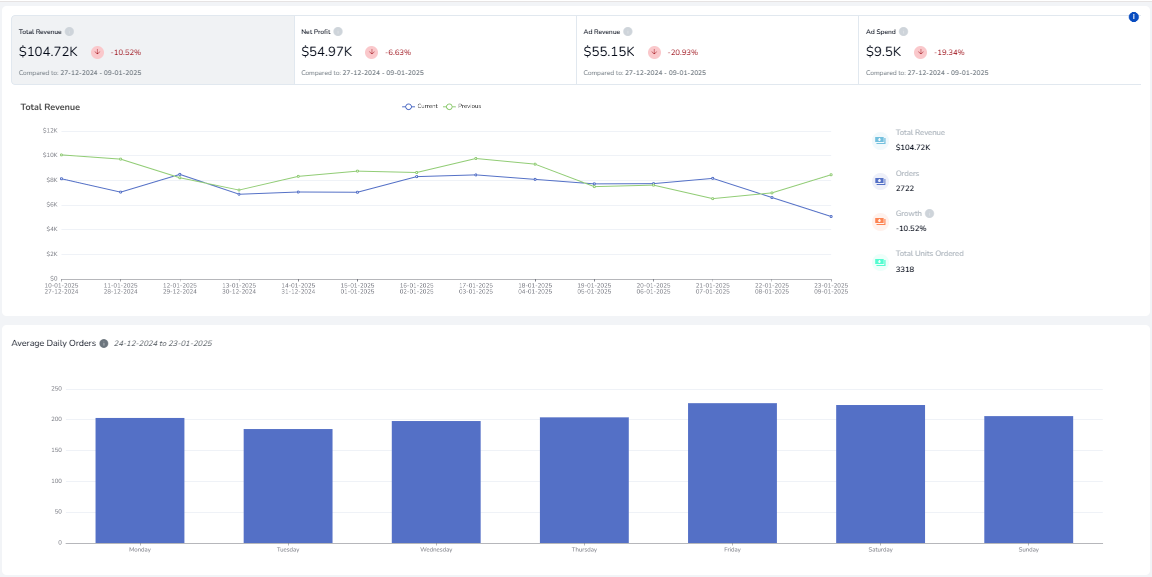
Real profit dashboards show the full picture — not just gross margin.
Official 2026 Aged Inventory Surcharge Table
Real 2026 Seller Examples
Example 1: Phone Case (Small Standard, $29 ASP, 500 units/month)
- FBA fee: $3.45
- TACoS: 12% ($3.48)
- Aged surcharge (at 200 days): $75/month total
- Net margin drops from 28% to 19% — $2,250 monthly loss if unmonitored.
Example 2: Kitchen Gadget (Large Bulky, $89 ASP) Non-SIPP + 280 days aged + 18% TACoS = $11.80 total leakage per unit. Switching to SIPP and proactive liquidation recovers $4,800/year.
Example 3: High-velocity bundle at 45 days supply Zero LIL + zero aged + 10% TACoS = clean 31% net margin.
Run these scenarios yourself in our Profit Engine — it automatically applies 2026 fees and surcharges.
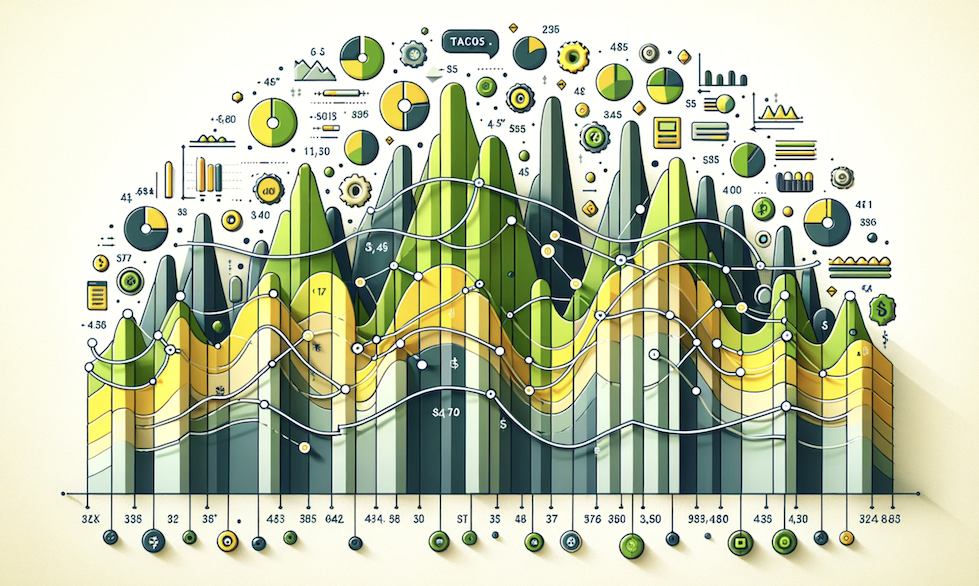
TACoS visualization after Andromeda — creative quality now directly impacts every dollar of profit.
6-Step Framework to Build Your 2026 Full-Funnel Model
- Export Seller Central data (Inventory Health + Payments + Advertising Reports).
- Input every variable into the Profit Engine (FBA fees auto-update for 2026).
- Set TACoS targets by campaign type (Andromeda rewards diversity).
- Flag SKUs approaching 150 days — liquidate or remove before the 181-day cliff.
- Model “what-if” scenarios (e.g., +20% agentic traffic via Shopify UCP).
- Review monthly — adjust pricing, bundling, or ad creative.
30-Day Action Plan (Copy-Paste Checklist)
Week 1: Run full catalog through p4product Profit Engine. Week 2: Fix any SKUs showing >10% leakage from aged or TACoS. Week 3: Implement SIPP for bulky items and creative clusters for ads. Week 4: Set automated alerts for 150-day inventory and TACoS spikes.
Frequently Asked Questions
Q: Does TACoS include only PPC or everything? Everything — PPC, DSP, off-platform, and any promotional spend.
Q: How often should I recalculate? At least monthly — Amazon snapshots aged fees on the 15th.
Q: Can I avoid aged fees entirely? Yes — target 35–150 days supply and use liquidation/removal before 181 days.
Q: How does Shopify Agentic Commerce affect this model? Higher conversion but different return rates — model it in the Profit Engine.
Take Control of 2026 Profitability Today
Full-funnel modeling is no longer optional. The sellers who integrate FBA fees, TACoS, and aged surcharges in one live model are the ones who will thrive while others watch margins disappear.
At P4Product.com we built the Profit Engine specifically for this 2026 reality — 100% free, no login, updated with official Amazon data, and the only tool that combines all three penalties in one dashboard.
Ready to see your true 2026 margins? → Launch Full-Funnel Profit Engine Now
All content is for educational purposes only. Results vary by account. Always confirm in Seller Central.