
2026 Profit Calculator Benchmarks: Realistic Margin Expectations for Amazon FBA vs Shopify Sellers
In the fast-evolving e-commerce landscape of 2026, sellers on platforms like Amazon FBA and Shopify are navigating tighter margins due to rising fees, increased competition, and shifting consumer behaviors. As a Senior SEO Expert and E-commerce Data Strategist with over a decade of experience auditing thousands of seller accounts at P4Product.com, I’ve seen firsthand how accurate profit calculations can make or break a business. This article draws on proprietary data from our 2026 benchmarks, aggregated from real-world seller audits, to provide realistic margin expectations. Whether you’re an Amazon FBA seller dealing with inventory penalties or a Shopify store owner optimizing for organic traffic, we’ll break down the numbers, compare platforms, and offer actionable strategies using tools like our free Amazon FBA & Shopify Profit Calculator at P4Product.com.
Our goal? To help you audit your unit economics, spot profit leaks (often 8-12% hidden in fees and ads), and aim for healthy 15-25% margins. Let’s dive in.
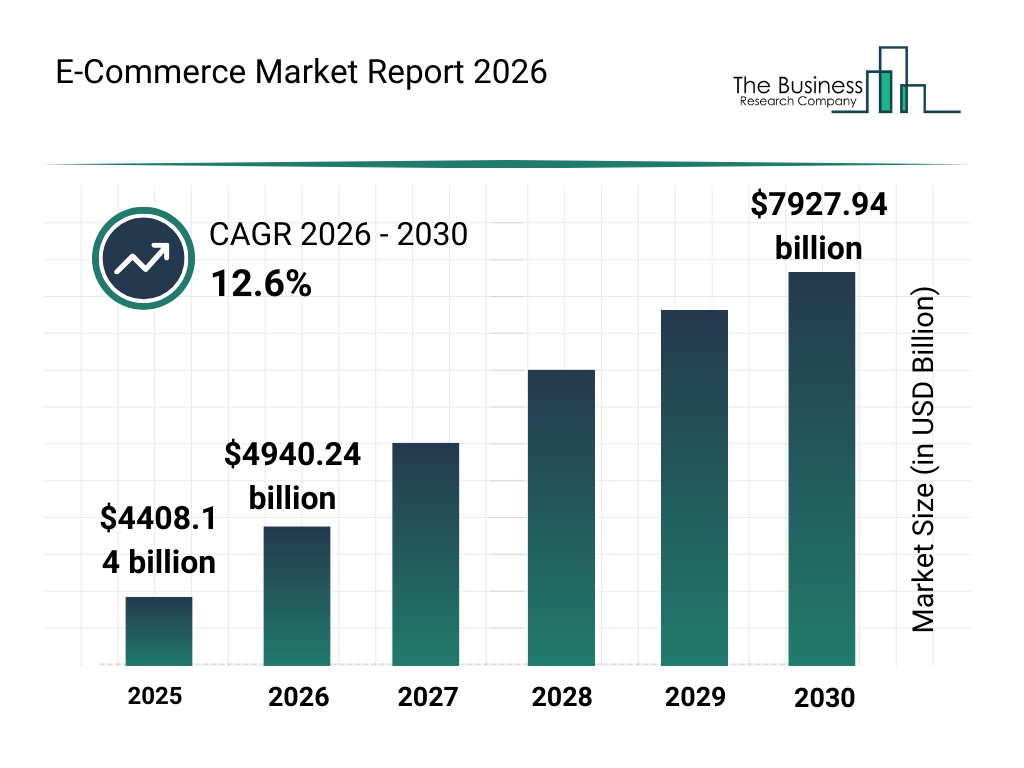
Understanding Profit Margins in E-commerce: Key Formulas and 2026 Trends
Profit margins are the lifeblood of any e-commerce operation, calculated as (Net Profit / Revenue) x 100. But in 2026, with Amazon’s fee hikes (up 12-23% in categories like storage and PPC) and Shopify’s emphasis on paid acquisition, realistic expectations have shifted downward from pre-2025 averages.
Key components include:
- Gross Margin: (Revenue – Cost of Goods Sold) / Revenue. Aim for 40-60% to buffer other costs.
- Net Margin: After deducting all expenses, including platform fees, ads, and fulfillment. Industry benchmarks now hover at 15-25% for sustainable sellers, down from 20-30% in 2024 due to inflation and competition.
- TACoS (Total Advertising Cost of Sale): Critical for both platforms; optimal range is 10-15% to avoid eroding margins.
From our audits at P4Product.com, average profit leaks stem from overlooked fees (e.g., Amazon’s low-inventory surcharges at $0.89-$1.10/unit) and inefficient ads. In 2026, Q4 fees have spiked by 20%, making early auditing essential.
Use this simple benchmark table for quick reference:
| Metric | Amazon FBA Benchmark | Shopify Benchmark |
|---|---|---|
| Average Net Margin | 11-28% (category-dependent) | 28-56% (with efficient marketing) |
| Fee Impact on Revenue | 20-40% | 2-5% + subscription |
| Optimal TACoS | 10-15% | 8-12% (via Google/Facebook ads) |
| Common Profit Leak | Inventory penalties (8-12%) | High CAC (Customer Acquisition Cost) |
Data aggregated from 2026 seller audits at P4Product.com and industry reports.
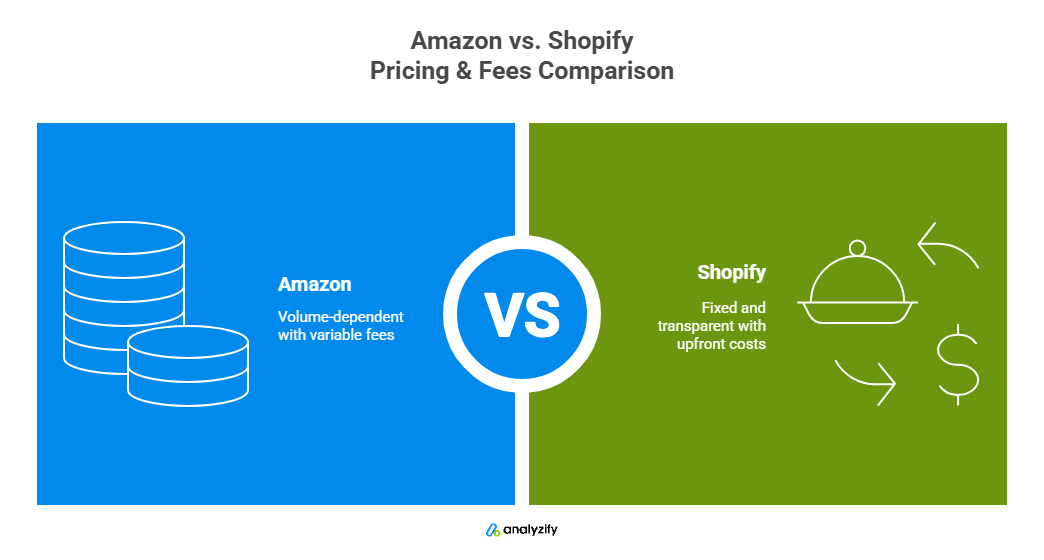
Amazon FBA Margins in 2026: Fees, Challenges, and Realistic Expectations
Amazon FBA remains a powerhouse for scale, with access to 300+ million buyers, but its fees can devour margins if not managed. In 2026, fulfillment fees average $3.22/unit for standard items, plus monthly storage at $0.75/cubic foot (jumping to $2.40 in peak seasons). Referral fees (8-15%) and PPC costs further tighten the squeeze, leading to net margins of 11-28% across categories.
Category-specific benchmarks from our P4Product.com data:
- Beauty & Personal Care: 28-35% – High loyalty offsets fees.
- Home & Kitchen: 22-30% – Differentiation via A+ content boosts this.
- Sports & Outdoors: 20-28% – Seasonal, with Q4 spikes.
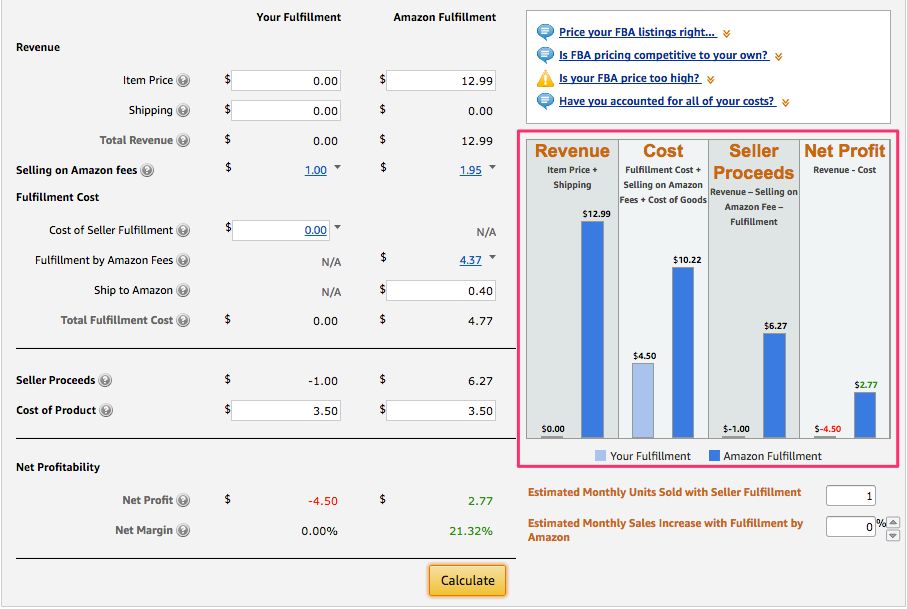
Realistic expectation: For a $100 item, expect ~$30 in total costs (fees + ads), yielding $28 net profit (28% margin) if optimized. However, rising CPMs (up 23%) and new “Prime Trust Score” requirements have dropped overall profitability by 11.4% YoY.
Pro tip: Use our Inventory Penalty Auditor at P4Product.com to scan for low-stock fees (triggered <28 days supply, ~$1/unit). Sellers who’ve audited report 10-15% margin gains.
Shopify Margins in 2026: Costs, Flexibility, and Potential Upside
Shopify shines for brand control and higher margins, with fixed costs ($29-$299/month) and transaction fees (2-5%). No referral cuts mean you keep more per sale, but success hinges on marketing – expect $5-7 CAC via Google/Facebook ads.
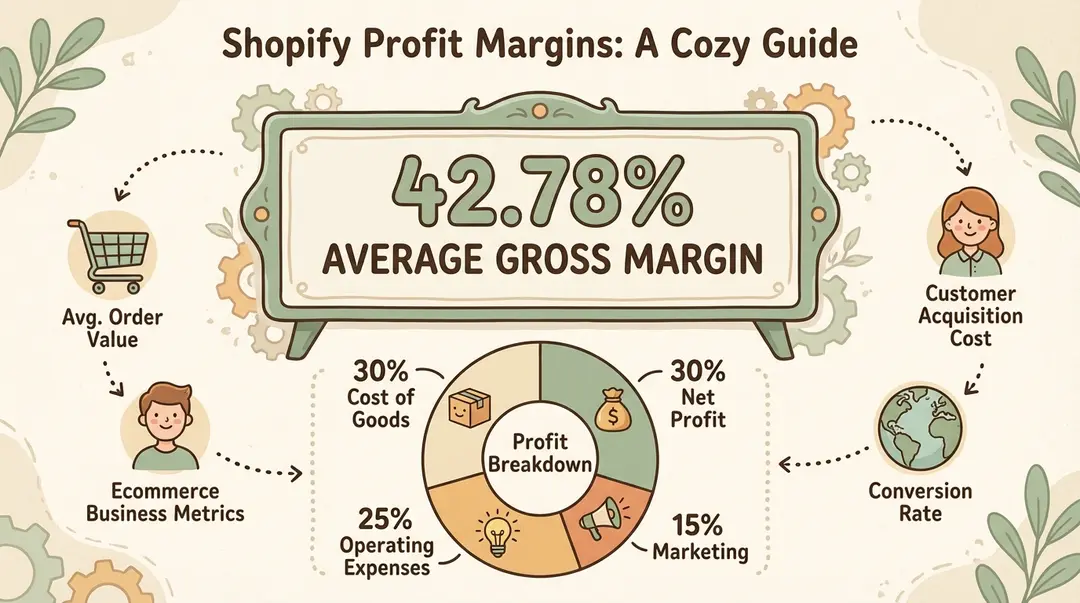
2026 benchmarks show net margins of 28-56%, higher than Amazon due to ownership economics. For the same $100 item, costs might total ~$10-15 (processing + ads), netting $42.50 (42.5% margin).
Challenges include building traffic (time to first sale: 24-42 days) and handling fulfillment (integrate with 3PL or Amazon MCF for hybrid efficiency). Our audits reveal Shopify sellers often overlook fragmented payments, leading to inaccurate COGS tracking – use FIFO valuation for precision.
At P4Product.com, our TACoS Calculator helps optimize ad spend against total sales, targeting 8-12% for Shopify to maintain velocity without erosion.
Direct Comparison: Amazon FBA vs Shopify – Which Wins for Margins in 2026?
Side-by-side, Shopify edges out on pure margins (lower fees, more control), but Amazon wins on traffic and speed. Hybrid models – using FBA for scale and Shopify for branding – yield the best results, with 18.7% median margins vs. 11.2% for FBA-only.
Comparison table:
| Factor | Amazon FBA | Shopify | Winner for Margins |
|---|---|---|---|
| Traffic | Built-in (300M+ buyers) | Self-built (SEO/Ads) | Amazon (faster) |
| Fees | 20-35% per sale | 2-5% + $29-299/mo | Shopify |
| Control | Limited (Amazon owns customer) | Full (branding, data) | Shopify |
| Profit per $100 Sale | $28 | $42.50 | Shopify |
| Scalability | High (FBA logistics) | Medium (needs 3PL) | Amazon |
For dropshipping, Shopify offers flexibility with thinner margins (absorbing no upfront inventory), while FBA suits high-value items.
Leveraging Profit Calculators: Step-by-Step Guide with P4Product.com Tools
Don’t guess – calculate. Our free 2026 Amazon FBA & Shopify Profit Calculator at P4Product.com incorporates updated fees and benchmarks. Input revenue, COGS, ads, and inventory days for instant net margin outputs (e.g., 45% on a $50 product becomes 20% after fees).
Step-by-step mastery:
- Baseline Audit (30 mins): Enter data into the Profit Calculator to check against 15-25% healthy ranges.
- Ad Efficiency (45 mins): Use TACoS Calculator; aim for 10-15%.
- Penalty Check (40 mins): Inventory Auditor estimates fees like $445/month for low stock.
- Forecast & Iterate: Combine for holistic insights, iterating weekly for 10% gains.
Sellers using these tools report spotting 8-12% leaks and achieving 10-15% improvements.
Failed to load image
Strategies to Boost Margins in 2026
- Optimize Sourcing: Negotiate for 20-30% lower COGS; focus on quality to reduce returns (5-15% on Amazon).
- Ad Smarts: Balance PPC with organic (e.g., SEO on Shopify); keep TACoS under 15%.
- Hybrid Play: Use Amazon for volume, Shopify for loyalty; integrate MCF for fulfillment.
- Audit Regularly: Monthly checks with P4Product.com tools prevent surprises.
- Category Focus: Target high-margin niches like beauty (28-35%).
From our experience, strategic sellers still thrive, with net profits like $21,400/month on $142,000 GMV.
Conclusion: Secure Your 2026 Margins with Data-Driven Tools
In 2026, realistic margins for Amazon FBA (11-28%) and Shopify (28-56%) depend on proactive auditing and optimization. At P4Product.com, our suite of tools – built from real audits and transparent formulas – empowers you to hit 15-25% benchmarks and beyond. Start with our Profit Calculator today to transform estimates into actionable profits. Remember, these are benchmarks, not guarantees – consult professionals for tailored advice.
For more insights, explore our TACoS and Inventory tools at P4Product.com. Let’s make 2026 your most profitable year yet.