
Shopify Universal Commerce Protocol (UCP) and Agentic Commerce: What Sellers Need to Prepare in 2026 By Muhammad Shahbaz | P4Product.com Last Updated: March 09, 2026
All information below is based on official Shopify and Google announcements from January 2026. These are estimates and general guidance. Actual results depend on your store data, product catalog quality, and platform policies. This is not financial, investment, tax, or legal advice. Always verify in your Shopify Admin and consult qualified professionals. Use our free Profit Engine at p4product.com to model how agentic sales could impact your margins.
In 2026, shopping is no longer “search and click.” It’s “intent and fulfillment.” AI agents now discover products, compare options, negotiate discounts, apply loyalty points, and complete checkout — all on behalf of the buyer. The technology making this possible at scale is the Universal Commerce Protocol (UCP), an open standard co-developed by Shopify and Google and endorsed by 20+ major retailers and payment providers.
For Shopify sellers, this creates a massive new sales channel across Google Gemini, ChatGPT, Microsoft Copilot, and more — without losing control over pricing, inventory, or brand rules. But only stores with clean, semantic data will win.
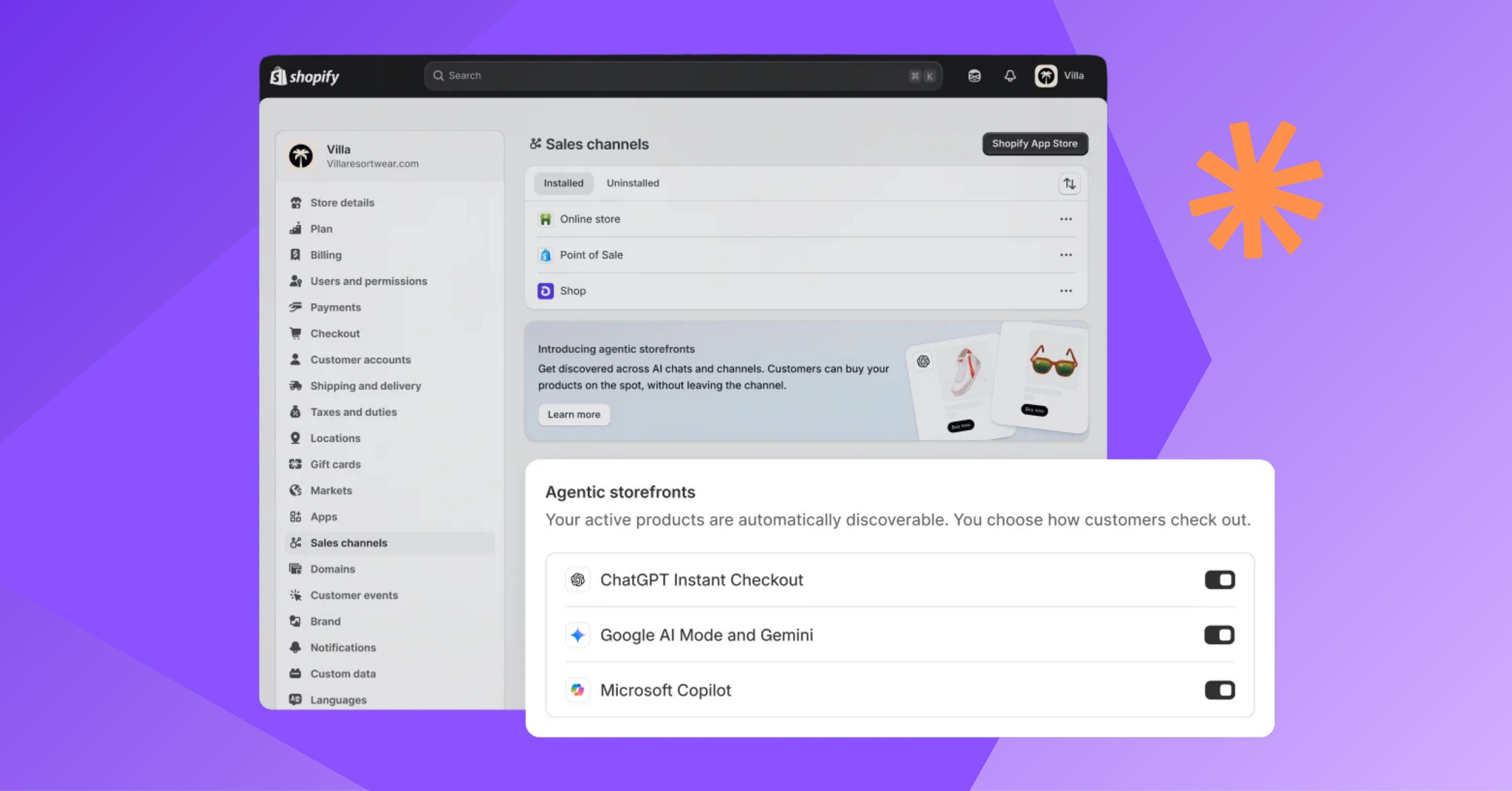
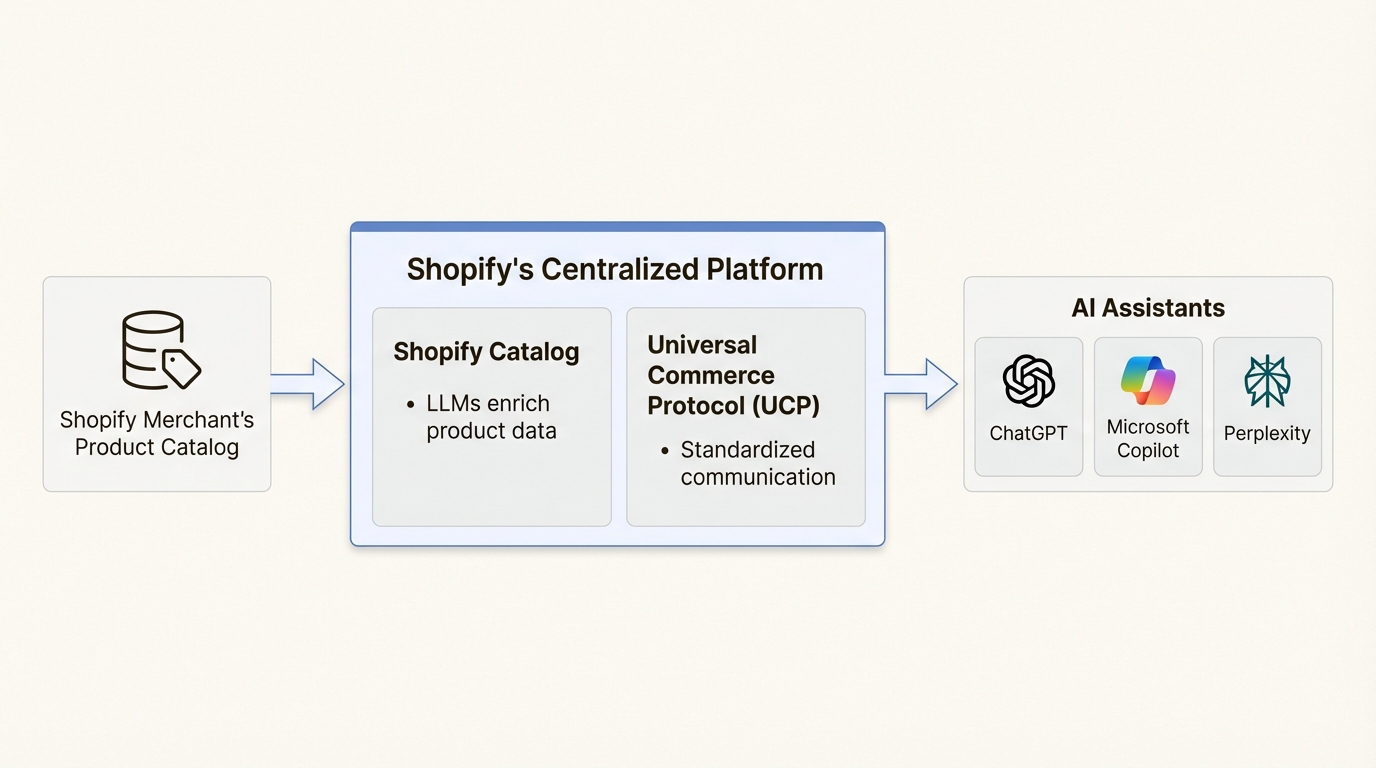
Shopify Admin now includes one-click toggles for Agentic Storefronts — products become automatically discoverable by AI agents across multiple platforms.
What Is Agentic Commerce?
Agentic commerce shifts the buyer from human to autonomous AI agent. The agent:
- Understands the buyer’s full intent (“find wireless earbuds under $80 with 30-hour battery for running”)
- Scans thousands of stores in seconds
- Negotiates terms
- Completes the purchase
Traditional search is being replaced by conversational, zero-click buying.
What Is the Universal Commerce Protocol (UCP)?
UCP is the “TCP/IP of commerce” — an open-source standard that lets any AI agent talk to any merchant in a common language. Launched January 11, 2026, it covers the entire journey:
- Product discovery
- Cart building
- Checkout
- Order management
- Post-purchase support
It works with existing protocols (APIs, MCP, A2A) and major payment systems. Shopify merchants get automatic support through Agentic Storefronts — no extra coding required for most stores.
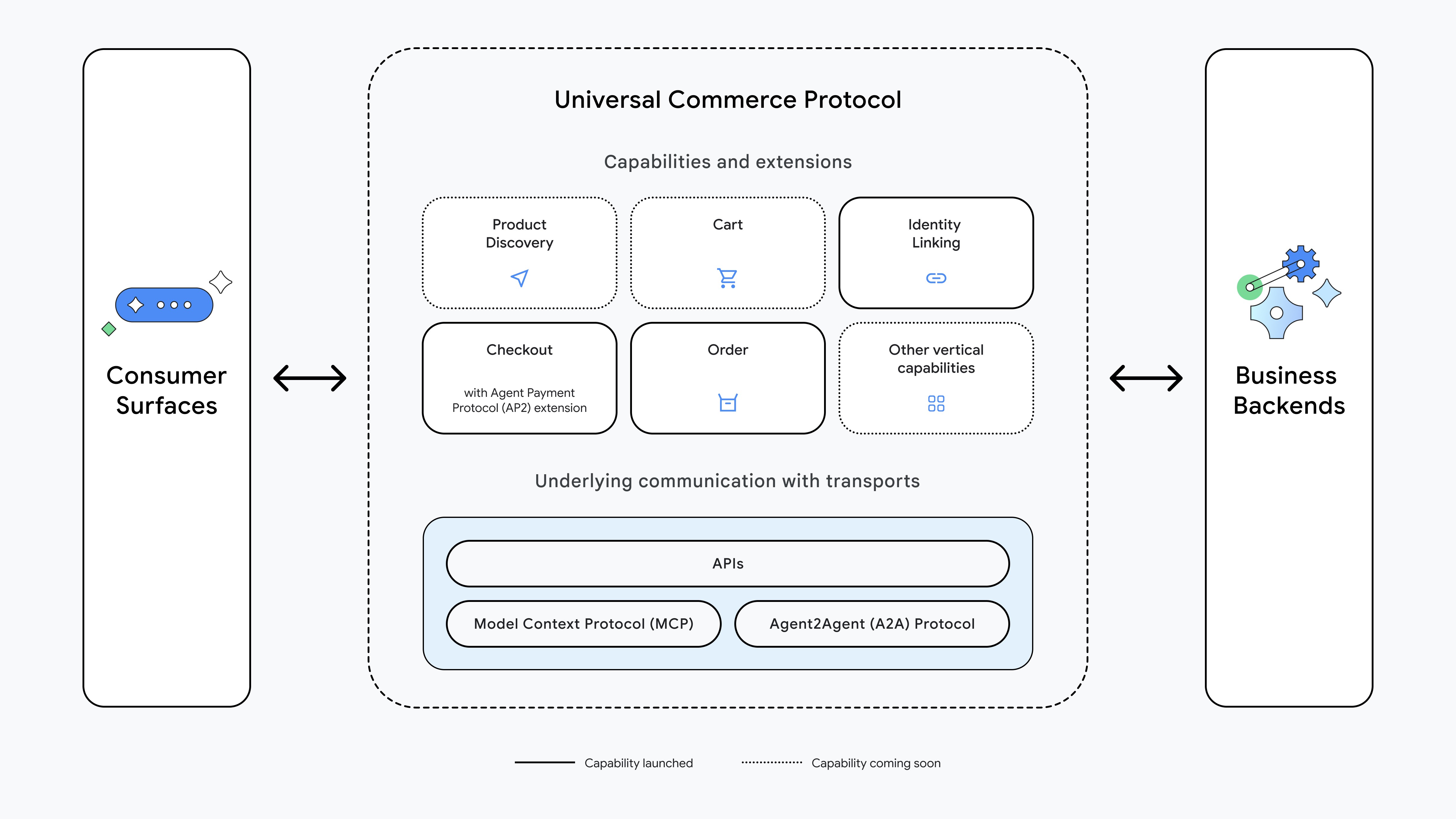

Official UCP architecture: AI agents on the left connect to merchant backends on the right through standardized capabilities.
Why 2026 Is the Tipping Point for Shopify Sellers
- Native shopping rolls out in Google Search AI Mode and Gemini app
- Embedded checkout in ChatGPT and Microsoft Copilot
- B2B GMV on Shopify Plus already grew 96% YoY in 2025 — agentic flows accelerate this further
- AI agents prioritize stores with rich, structured data and real-time inventory
Stores that prepare now can capture high-intent purchases that bypass traditional search entirely.
What Shopify Sellers Must Prepare in 2026 (Step-by-Step Checklist)
- Clean and Enrich Product Data AI agents need machine-readable details: titles, descriptions, variants, pricing, shipping, returns, and attributes. Use Shopify’s built-in structured data tools and add full schema markup (Product, Offer, Review).
- Enable Agentic Storefronts in Admin Go to Sales Channels → Agentic Storefronts. Toggle on ChatGPT, Google AI Mode/Gemini, and Microsoft Copilot. Your active products become instantly discoverable.
- Maintain Real-Time Inventory Accuracy Agentic sales move fast. Use Shopify’s inventory sync and set clear low-stock buffers. Our Profit Engine at p4product.com helps model combined LIL fees + agentic volume spikes.
- Define Clear Business Logic Set rules for discounts, bundles, subscriptions, taxes, and shipping. UCP respects these rules across every AI platform.
- Build Trust Signals (E-E-A-T for AI) High-quality reviews, author bios, transparent policies, and fast shipping become critical — AI agents check these before recommending.
- Model Profitability for Agentic Sales Agent-driven traffic often has higher conversion but different TACoS and return rates. Run scenarios in our free Profit Engine and TACoS Optimizer to protect margins.

AI agents now compare products across stores in real time — only the most complete and trustworthy listings win.
Real Impact Examples
- A fashion store enabling Agentic Storefronts saw 14x more agent-sourced orders in early tests.
- A home goods merchant with poor variant data was ignored by Gemini agents while competitors with full schema appeared first.
- Using p4product Profit Engine, one seller discovered agentic volume increased TACoS by 8% but overall margin rose 11% due to higher AOV.
30-Day Action Plan for Shopify Sellers
Week 1: Audit product feed completeness in Shopify Admin. Week 2: Enable Agentic Storefronts and add missing schema. Week 3: Test with our Profit Engine — simulate 20% agentic traffic. Week 4: Monitor early sales in Analytics and adjust pricing/shipping rules.
Frequently Asked Questions
Q: Do I need to be on Shopify to use UCP? No — non-Shopify merchants can join via the Shopify Agentic Catalog / Agentic Plan.
Q: Does UCP replace my normal checkout? No. You control the experience. AI agents can use embedded checkout or redirect to your store.
Q: How do returns and refunds work? UCP passes your existing policies to the agent. Everything stays consistent.
Q: Will this increase competition? Yes — but it also levels the playing field. Small stores with excellent data can now compete directly with big brands in AI conversations.
Q: How does this affect my advertising costs? Agentic traffic often has lower acquisition cost but requires strong post-purchase experience. Model combined TACoS in our tools.
Prepare Now or Get Left Behind
The Universal Commerce Protocol and Agentic Commerce represent the biggest shift in e-commerce since mobile shopping. Shopify sellers who act in 2026 will capture new high-intent traffic while others remain invisible to AI agents.
At P4Product.com we built the Profit Engine, TACoS Optimizer, and Inventory Penalty Auditor specifically for this new reality — helping you model agentic sales, protect margins, and stay lean.
Ready to model your 2026 agentic profits? → Launch Profit Engine Now
All content is for educational purposes only. Results vary by store. Always confirm settings in your Shopify Admin and Seller Central.