
Quick Answer In small Pakistani apartments—especially rented ones in cities like Faisalabad, Lahore, or Karachi—both UPS systems and solar inverters provide backup power during frequent load shedding. A traditional UPS offers near-instant switchover (often under 10 milliseconds) and suits sensitive electronics like laptops or routers for short outages. A solar inverter (often hybrid) delivers longer runtime using batteries and optional solar panels, making it better for extended power cuts affecting fans, lights, and a fridge. Neither is universally “better”—it depends on your apartment’s space, typical load (usually 500–1500 W in a 1–2 bedroom flat), and whether you can add panels on a balcony or terrace. This guide compares them practically for real Pakistani small-home conditions, filling the gaps many general articles overlook: rented-space constraints, dust and humidity effects, minimal-installation options, and everyday load-shedding realities.

Understanding Power Backup Needs in Small Pakistani Apartments
Pakistan’s urban apartments face predictable challenges: 4–8 hours of daily load shedding in many areas, high humidity, thick dust, and limited space. Small apartments (often 500–900 sq ft, rented) cannot easily accommodate large rooftop solar arrays or permanent wiring changes. Families rely on ceiling fans, LED lights, a small fridge, TV or laptop, and phone chargers. A reliable system must be compact, safe for rented walls, and effective against sudden blackouts that disrupt sleep or work.
Most online comparisons focus on technical specs or large homes, ignoring apartment realities like balcony-only solar access or the need for plug-and-play setups. This article analyzes both options through that lens, using side-by-side details, real-world examples, and Pakistan-specific factors to help you decide without guesswork.
How a UPS Works in a Small Apartment
A UPS (Uninterruptible Power Supply) is essentially a battery-backed power conditioner with a fast-transfer inverter. When grid power drops, it switches to battery in milliseconds—critical for computers or routers that crash on even brief interruptions. In apartments, compact tower or rack-style UPS units (500–2000 VA) sit near a desk or main board.
They usually include built-in or external sealed batteries and protect against surges. For small loads (e.g., one PC, monitor, modem, and a couple of lights), a good UPS keeps everything running seamlessly for 10–60 minutes. In Pakistani conditions, however, longer outages mean you’ll need larger external battery banks, which take floor space in already cramped rooms.

How a Solar Inverter Works in a Small Apartment
A solar inverter (especially hybrid models popular in Pakistan) converts DC power from batteries or solar panels into usable AC. During normal grid supply, it can charge batteries from mains or solar. On outage, it draws from batteries for hours—ideal for running fans and fridge overnight. Hybrid versions add solar input, so daytime sunlight extends runtime without draining batteries fully.
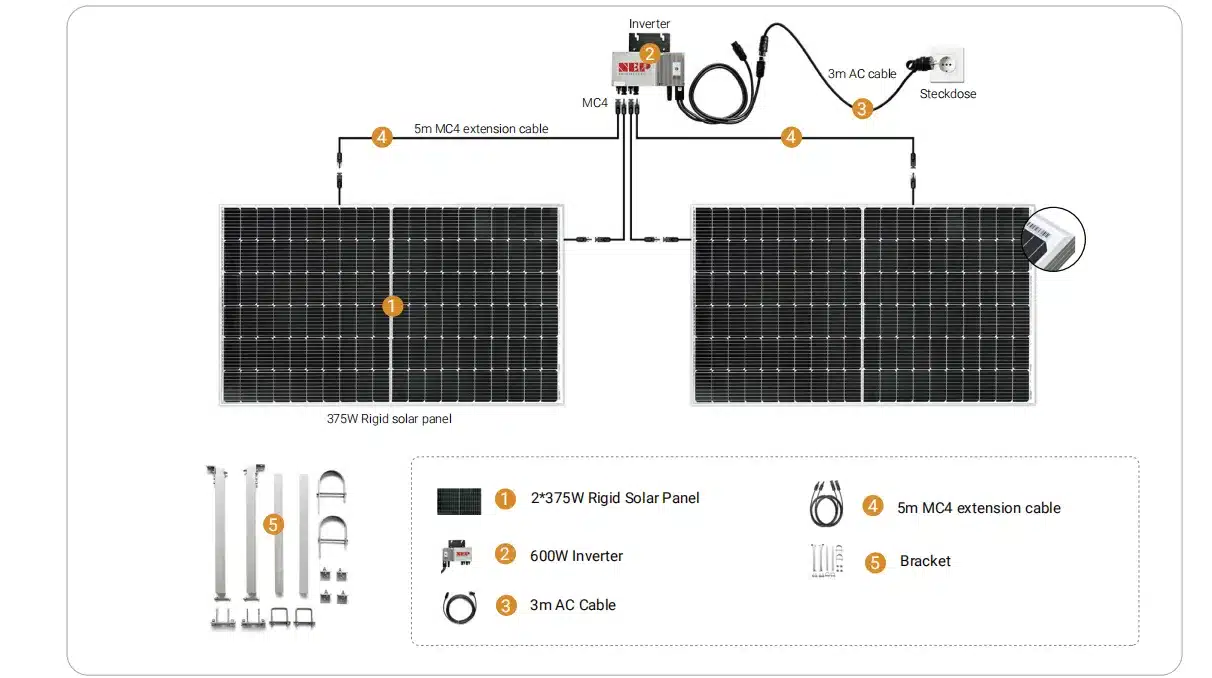
In apartments, balcony-mounted micro or plug-in solar kits (300–800 W panels) are increasingly common because they require no roof access and can be removed when moving. The inverter unit mounts on a wall or stands in a corner, wired to essential circuits. This setup turns intermittent sunlight into usable backup, reducing grid dependence during long summer load shedding.
Side-by-Side Comparison for Small Apartments
Here’s a clear comparison tailored to 1–2 bedroom rented flats in Pakistan:
- Switchover Time: UPS – 0–10 ms (seamless for sensitive gear); Solar Inverter – 300–500 ms (noticeable flicker on lights/fans but fine for most home use).
- Backup Duration: UPS – Short (minutes to 1–2 hours with standard batteries); Solar Inverter – Longer (4–12+ hours with proper battery bank).
- Power Source: UPS – Grid + battery only; Solar Inverter – Grid, battery, and solar (hybrid models recharge during day).
- Space Requirements: UPS – Compact unit + battery box (fits under desk or in cupboard); Solar Inverter – Inverter + larger battery bank + optional balcony panels (more floor/wall space).
- Installation: UPS – Mostly plug-and-play for select devices; Solar Inverter – Often needs wiring to distribution board (may require landlord approval in rented flats) or portable kits for easier setup.
- Maintenance in Dusty/Humid Conditions: Both need regular cleaning, but solar panels require balcony wiping; tubular or lithium batteries in inverters last longer if ventilated properly.
- Scalability: UPS – Limited by unit size; Solar Inverter – Easier to add batteries or panels later.
- Suitability for Typical Apartment Loads: UPS excels for electronics; Solar Inverter handles whole-room essentials (fans + lights + fridge).
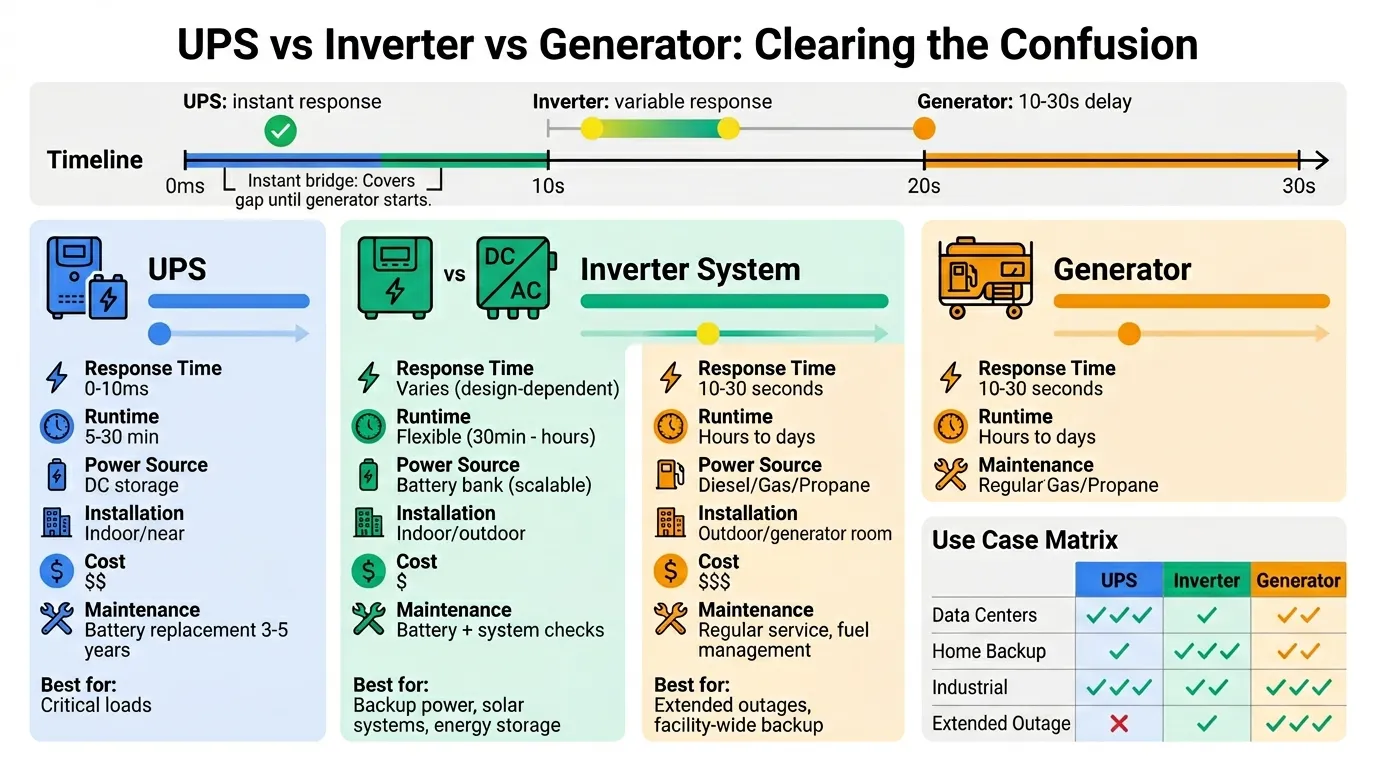
Many general SERP results stop at these basics. What they miss is how rented apartments limit wiring, or how balcony solar can generate 2–4 kWh daily in Pakistan’s sunny climate—enough to offset evening backup needs.
Pros and Cons for Small Pakistani Apartments
UPS Pros:
- Instant protection for laptops and routers.
- Simple setup—no electrician needed for basic models.
- Quiet and compact for tight spaces.
UPS Cons:
- Short runtime during extended load shedding common in Punjab and Sindh.
- Batteries need replacement every 2–4 years.
- Higher cost per watt for longer backup.
Solar Inverter Pros:
- Extended runtime ideal for overnight outages.
- Solar input reduces battery drain in sunny months.
- Can power multiple rooms when wired properly.
- Hybrid models act as both inverter and UPS-like system.
Solar Inverter Cons:
- Slower switchover may flicker lights.
- Requires more space for batteries and panels.
- Balcony panels need secure mounting and dust cleaning.
- Initial setup may involve minor wiring (check rental agreement).

Common Mistakes Apartment Dwellers Make
- Oversizing or undersizing: A 500 VA UPS for a fridge + fans will drain instantly; a 5 kW inverter in a 1-bedroom flat wastes money. Calculate your essential load first (add watts of fans, lights, fridge compressor surge).
- Ignoring dust and heat: Pakistani summers push temperatures inside apartments over 40°C—batteries fail faster without ventilation.
- Skipping pure sine wave: Modified sine wave units can damage sensitive appliances over time.
- Placing panels or batteries incorrectly: Balcony panels facing wrong direction lose 30–50% efficiency; batteries in humid corners corrode.
- Forgetting rented-space rules: Permanent DB wiring may need landlord OK—opt for portable hybrid kits instead.
Avoiding these turns a backup system from headache to reliable solution.
Real Pakistani Conditions: Load Shedding, Dust, and Humidity
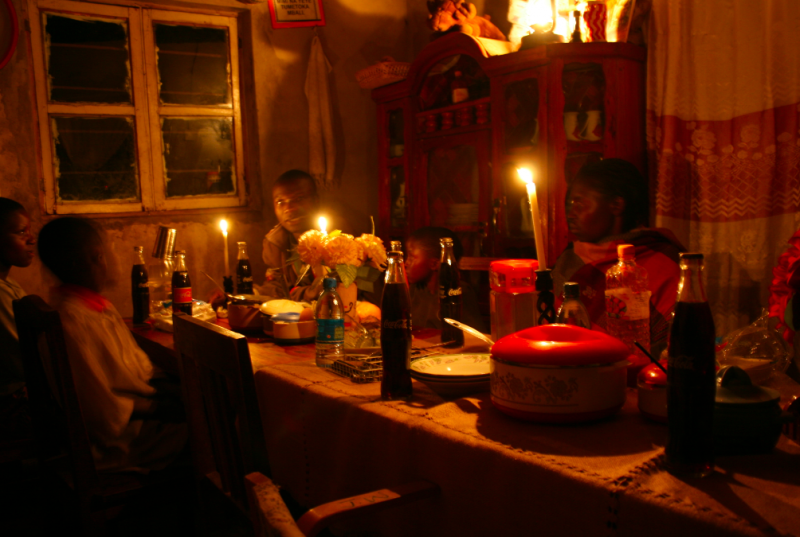
In Faisalabad and similar cities, load shedding follows seasonal patterns—longer in summer when fans and AC are critical. Small apartments trap heat and dust, stressing electronics. A UPS keeps a study corner alive during short evening cuts, but families often need fans running all night. Solar inverters shine here: balcony panels capture morning sun, charging batteries for evening use. Real users report hybrid systems handling 4–6 fans + lights + fridge for 6–8 hours—far beyond most UPS units—while the dust-proof designs of modern inverters hold up better in humid Punjab weather.
Installation Tips for Rented Small Spaces
- UPS route: Buy a line-interactive or online UPS, plug essentials into it. Add external tubular batteries if needed (common in Pakistan for longer life).
- Solar inverter route: Choose hybrid models with MPPT controllers. Balcony solar kits (plug-and-play 400–800 W) are perfect—no roof required. Mount inverter indoors near the main switch.
- Hybrid sweet spot: Many Pakistani households now use a hybrid solar inverter as primary backup with optional small UPS for critical devices. This combines fast switch for electronics and long runtime for home comfort.
Frequently Asked Questions
Can I use a solar inverter like a UPS? Yes—hybrid solar inverters include built-in transfer switches and can mimic UPS behavior for home loads, though pure UPS units still win on speed for computers.
Is balcony solar allowed in rented apartments? Most kits are non-permanent and removable. Check your agreement; many residents in Karachi and Lahore use them successfully.
Which handles fridge and fans better? Solar inverters with adequate battery banks—fridges have high startup surges that drain small UPS quickly.
What about maintenance? Clean dust every 2–3 months; test batteries quarterly. Lithium options (emerging in Pakistan) need less care than traditional tubular ones.
Can both systems work together? Absolutely. Many apartments run a small UPS for the study area and a larger inverter for lights and fans.
Final Thoughts: Choosing What Fits Your Small Apartment
For small apartments facing Pakistan’s power challenges, a traditional UPS is excellent for short, instant protection of sensitive devices in limited space. A solar inverter (especially hybrid with balcony panels) offers practical, longer-lasting backup that aligns with sunny days and extended outages—without needing massive rooftop installations.
The best choice depends on your exact load, available balcony/terrace space, and whether you prioritize speed or runtime. Many small-home owners start with a hybrid solar inverter for whole-room comfort and add a compact UPS for electronics if needed. Both options, when chosen thoughtfully and installed correctly, turn frustrating blackouts into manageable evenings—keeping fans spinning, lights on, and daily life moving in your rented Pakistani apartment.
Evaluate your space, test your typical load during the next outage, and select the system that matches your real daily needs. Reliable backup is about smart, practical decisions—just like choosing the right curtain length or desk placement for small rooms.