
Quick Answer: For most small houses (3-5 marla) in Pakistan, porcelain or ceramic tiles offer better practicality due to lower maintenance, easier cleaning in dusty conditions, and affordability. Marble provides a premium, light-reflecting look that can make tight spaces feel larger, but it demands regular polishing and higher upfront effort. The best choice depends on your family size, local weather, and how much daily upkeep you can manage—no single option is universally “better.”
Pakistan’s small homes face unique challenges: limited square footage, high foot traffic from joint families, relentless dust in cities like Faisalabad, Lahore, and Multan, humid monsoons in Karachi, and scorching summers everywhere. Flooring isn’t just a surface—it affects how big your room feels, how easy it is to keep clean during power cuts, and how safe it is for kids and elders. This guide dives deep into tiled floors (ceramic, porcelain, vitrified) versus natural marble, tailored specifically for compact Pakistani homes. We’ll cover real-world performance under local conditions, common pitfalls, and what actually matters when space is tight.
Understanding Tiled Floors in the Pakistani Context
Tiled flooring usually means ceramic, porcelain, or vitrified tiles—widely available from local manufacturers and importers. These are made from clay and minerals, fired at high temperatures for strength. In small houses, 12×12 inch or 18×18 inch tiles are popular because they fit neatly without excessive cutting in compact rooms.
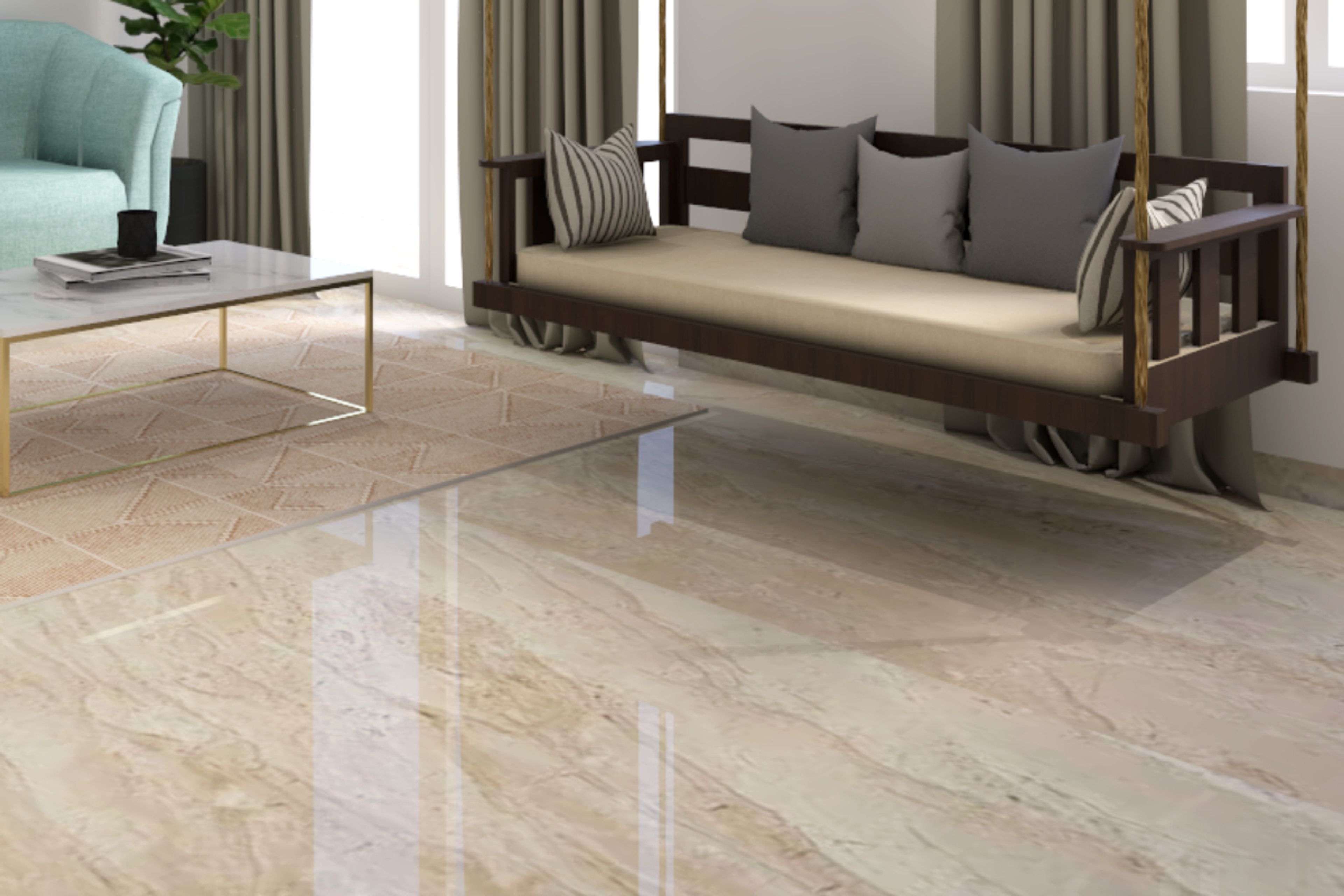
100+ Living Room Tile Designs | Ideas for your interiors – Livspace
Porcelain tiles, in particular, have become a go-to in Pakistan because they are denser and less porous than basic ceramic. They resist water absorption, which matters during monsoon season when humidity spikes and minor leaks can occur in older rented homes. Designs range from matte anti-skid options (great for kitchens and bathrooms) to glossy marble-look tiles that mimic expensive stone without the cost.
What Makes Marble Flooring Different?
Marble is a natural metamorphic stone, quarried locally in Pakistan (think Ziarat White, Badal Grey, or Tavera varieties). It is cut into slabs or tiles and polished to a high shine. In small houses, marble’s reflective surface bounces natural light, creating an illusion of extra space—a real advantage when your drawing room doubles as a TV lounge and study corner.

Tile, Marble, Vinyl, Epoxy, and, Wooden Flooring in house
However, marble is porous unless sealed properly. It shows scratches from furniture legs or kids’ toys more easily than porcelain, and it requires periodic polishing (every 8-10 years on average) to keep that showroom glow.
Head-to-Head Comparison for Small Houses
Here’s how the two stack up in the realities of Pakistani small-home living:
Cost Considerations (Approximate 2026 Market Ranges) Material and installation costs vary by city and quality, but tiles generally come in lower. Basic good-quality floor tiles start around PKR 120–450 per square foot (material only), while premium porcelain or vitrified options reach PKR 300–800. Marble slabs or tiles typically range from PKR 250–1,000+ per square foot, with installation adding more because of the need for precise leveling and grouting. In a 1,000 sq ft small house, the difference can be noticeable upfront, but tiles often win on total project budget for budget-conscious families building or renovating rented spaces.
Durability and Lifespan Both are strong, but porcelain tiles edge out in high-traffic small homes. They resist chipping, scratching, and cracking better under daily use—think kids running around or heavy charpai movement. Marble lasts decades with care but can etch from acidic spills (like lemon juice or vinegar common in Pakistani kitchens). In dusty Punjab winters, tiles hold up without losing shine; marble may dull faster if not maintained.
Maintenance and Cleaning in Pakistani Conditions This is where tiles shine for small-house owners. A simple sweep and mop with water keeps porcelain tiles looking fresh even during Faisalabad’s dust storms. Marble needs pH-neutral cleaners and periodic polishing—tasks that become burdensome in small homes where every corner is used daily. Humidity in Karachi can cause marble to absorb moisture if not sealed, leading to stains. Tiles are non-porous, making them ideal for homes without 24/7 maid service.
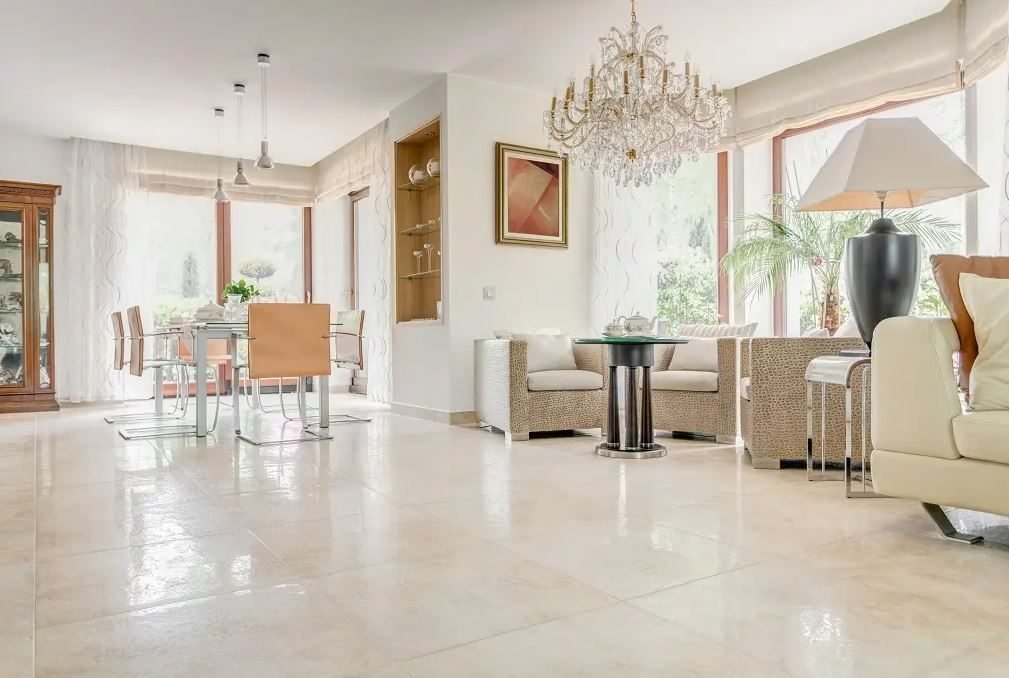
Tile, Marble, Vinyl, Epoxy, and, Wooden Flooring in house
Heat and Comfort in Pakistan’s Climate Both surfaces stay cooler than wood or vinyl—welcome in 40°C+ summers. Marble feels naturally cooler underfoot and reflects heat, which helps in small, enclosed rooms. Tiles can be chosen with matte finishes to avoid that icy winter chill in northern areas. Neither retains heat like concrete, but marble’s thermal mass can make a small room feel more comfortable year-round.
Aesthetics and Space Perception In tiny living spaces, visuals matter most. Marble’s seamless, shiny finish and natural veining create depth and elegance, making 10×12 ft rooms feel grander. Tiles offer endless patterns—geometric, wood-look, or stone-effect—so you can zone areas (e.g., different tiles for kitchen vs. lounge) without walls. For rented small houses, tiles let you experiment affordably without permanent commitment.
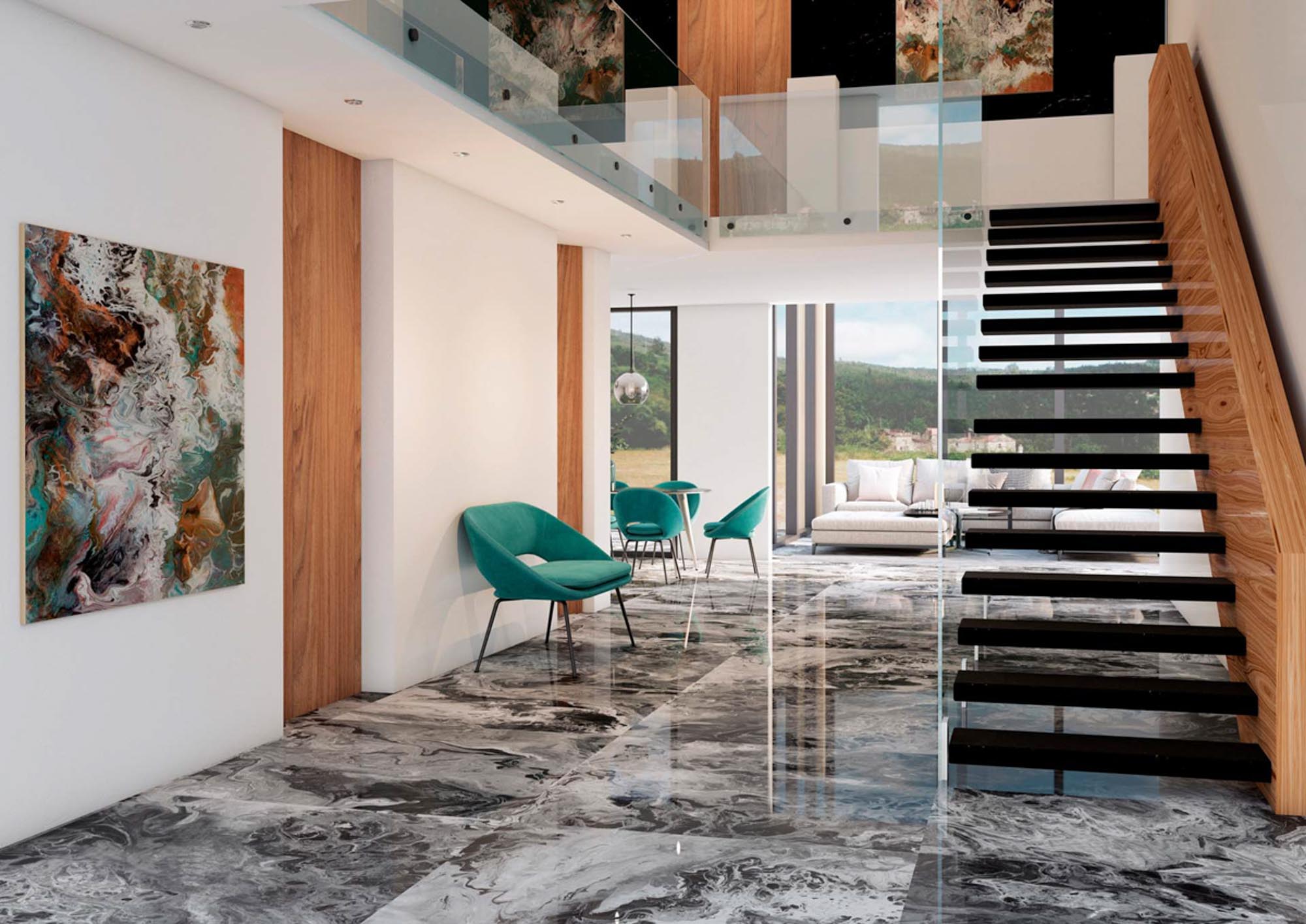
Marble flooring: options and recommendations ▷ Apavisa
Installation Time and Process Tiles install faster (1-3 days for a small house) and require less sub-floor preparation. Marble slabs take longer (5-10 days) and need skilled labor for perfect joints—crucial in small rooms where imperfections show. In older Pakistani homes with uneven floors, tiles are more forgiving.
Slip Resistance and Safety Anti-skid porcelain tiles score higher for families with children or elders—vital in small homes where one fall can be dangerous. Polished marble can be slippery when wet; many owners add rugs or choose honed (matte) finishes.
Availability and Local Factors Pakistan produces both materials locally. Tiles are mass-produced and stocked everywhere from Sunday bazaars to big stores in Lahore and Karachi. Marble is abundant from Balochistan quarries, supporting local industry, but quality varies—always check for consistent thickness in small-house projects.
Common Mistakes Small-House Owners Make
- Choosing glossy marble without considering kids or dust: It looks stunning initially but becomes a cleaning headache.
- Ignoring sub-floor leveling in old rented homes: Both options fail if the base isn’t flat.
- Going purely on price: Cheap tiles crack easily; low-grade marble stains quickly.
- Forgetting expansion gaps: Pakistan’s temperature swings can cause cracking without proper joints.
- Overlooking light reflection: Dark marble in a north-facing small room can make it feel smaller and dimmer.
Real Pakistani Conditions: What Actually Happens
In humid Karachi summers, sealed porcelain tiles handle moisture and salt air far better than unsealed marble. In dusty Faisalabad or Multan, tiles wipe clean in minutes during load-shedding; marble polishing requires power and time many small families lack. Families in 5-marla homes often report that tiles reduce daily sweeping time by half—time they’d rather spend elsewhere.
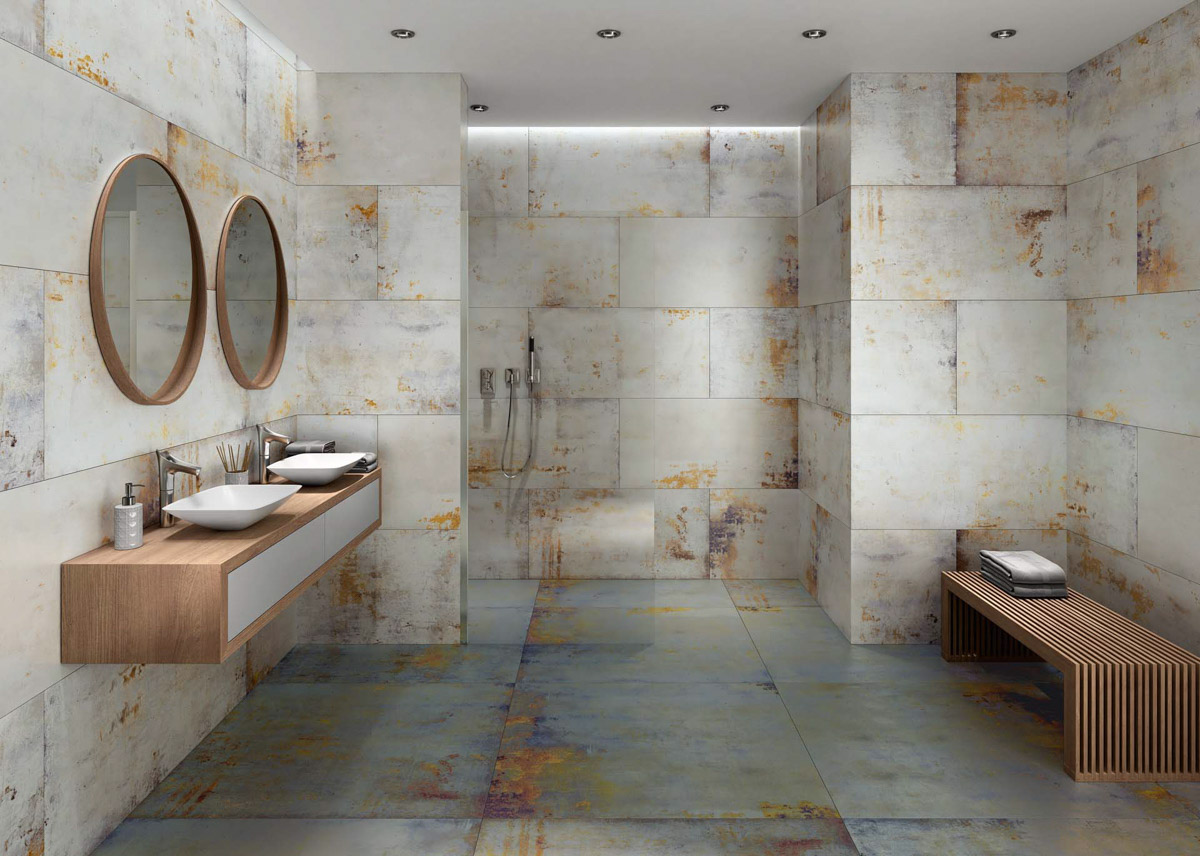
Porcelain tile bathroom flooring ideas I Apavisa
Power cuts are routine. Tiles don’t require special equipment for basic cleaning, unlike marble which benefits from polishing machines.
Pros and Cons Summary for Small Houses
Tiled Floors Pros: Affordable, low-maintenance, variety of designs, quick install, slip-resistant options, easy to replace sections if damaged. Cons: Can feel less “premium” to some, grout lines collect dust if not cleaned regularly.
Marble Floors Pros: Timeless luxury, excellent light reflection (makes small rooms feel bigger), natural cooling, high resale appeal in owned properties. Cons: Higher cost and maintenance, prone to etching/staining, slippery when polished and wet, longer installation.
Frequently Asked Questions
Q1: Which is better for a 3-marla rented house? Tiles—easier to maintain and remove if you move.
Q2: Does marble make a small room look bigger? Yes, its shine and seamless look create depth and brightness.
Q3: How often does marble need polishing in Pakistan? Every 8–10 years on average, or sooner in high-dust areas.
Q4: Are there marble-look tiles that work well? Absolutely—many porcelain tiles imitate marble perfectly at half the price and maintenance.
Q5: Which is safer for kids? Matte or anti-skid tiles.
Q6: Can I mix both in one small house? Yes—marble in the formal lounge and tiles in bedrooms/kitchen is a popular hybrid.
Q7: What about humidity and monsoon? Porcelain tiles handle it best due to low porosity.
Q8: How do I check quality before buying? For tiles: tap for a clear ring sound; for marble: check for even color and no cracks.
Final Recommendation
There is no one-size-fits-all answer for small houses in Pakistan. If your priority is practicality, easy cleaning, and staying within budget while handling dust and humidity—go with high-quality porcelain or vitrified tiles. If you want that classic, spacious, luxurious feel and are ready for the maintenance routine (or live in a low-dust area with help available), marble delivers unmatched elegance.
Visit local showrooms in your city, bring home samples, and place them in your actual rooms under real lighting and foot traffic. Test how they feel at 6 AM when the dust settles and at 10 PM after dinner spills. Your small house deserves flooring that works with your lifestyle, not against it.
Whichever you choose, focus on quality installation and proper sealing. A well-chosen floor will serve your family for years, making even the smallest Pakistani home feel comfortable, clean, and complete.