
Living in a small bedroom in Pakistan often feels like solving a daily puzzle. Whether it’s a cozy one-bedroom flat in Multan’s older neighborhoods, a high-rise apartment in Lahore, or a compact family room in Karachi, every square foot counts. The bed usually takes center stage, leaving little breathing room for the rest of the furniture. That’s when the question pops up: should the rug go under the bed or beside it?
Both choices can transform a tight space from functional to inviting. One option creates a grounded, cozy base; the other keeps things light, easy to clean, and visually open. In Pakistani homes where tiled or marble floors stay cool in summer but feel chilly in winter, a well-placed rug adds softness without overwhelming the room. Let’s explore both approaches with real-world ideas that fit our small-home lifestyle.
Why Rug Placement Matters in Compact Pakistani Bedrooms
Small bedrooms here are often multi-purpose—sleeping, dressing, and sometimes even a quiet corner for work or prayer. A rug doesn’t just cover the floor; it defines the mood. Place it under the bed and the room instantly feels anchored and warmer, especially during those cooler December nights in Punjab. Position runners or smaller pieces beside the bed and you gain easier movement, simpler sweeping, and the illusion of extra space—perfect when the room already doubles as a guest area.
Many families notice that the right placement softens harsh morning footsteps on cool tiles and adds a layer of personality without extra furniture. It’s less about rules and more about what feels right when you step into the room after a long day.
Above: A classic under-bed rug setup that anchors the space while leaving breathing room around the edges—easy to imagine in a small Pakistani apartment with light walls and simple bedding.
Option 1: Placing the Rug Mostly or Fully Under the Bed
This remains a favorite for many because it makes the bed the clear focal point. In a small room, the rug peeks out 12–18 inches on the sides and at the foot, giving just enough soft landing space when you swing your legs out in the morning.
In practice, this works beautifully on Pakistani tiled floors. The rug stays mostly hidden under the bed frame but still softens the immediate area around the nightstands. Families in compact homes often choose this when they want the room to feel cocooned and intentional. A medium-sized dhurrie or flat-weave rug in soft beige or muted terracotta tones blends with traditional wooden beds or modern metal frames common in local markets.
One clever twist for very tight spaces: shift the rug slightly so only the lower two-thirds of the bed sits on it. The headboard side stays open, making the room appear longer. This partial placement is especially handy in older homes where under-bed storage is essential—think suitcases or extra linens tucked away neatly.
The visual effect? The rug grounds the largest piece of furniture without eating up walking space. Pair it with lightweight cotton bedding in similar earthy shades and you create a calm corner that feels thoughtfully put together.
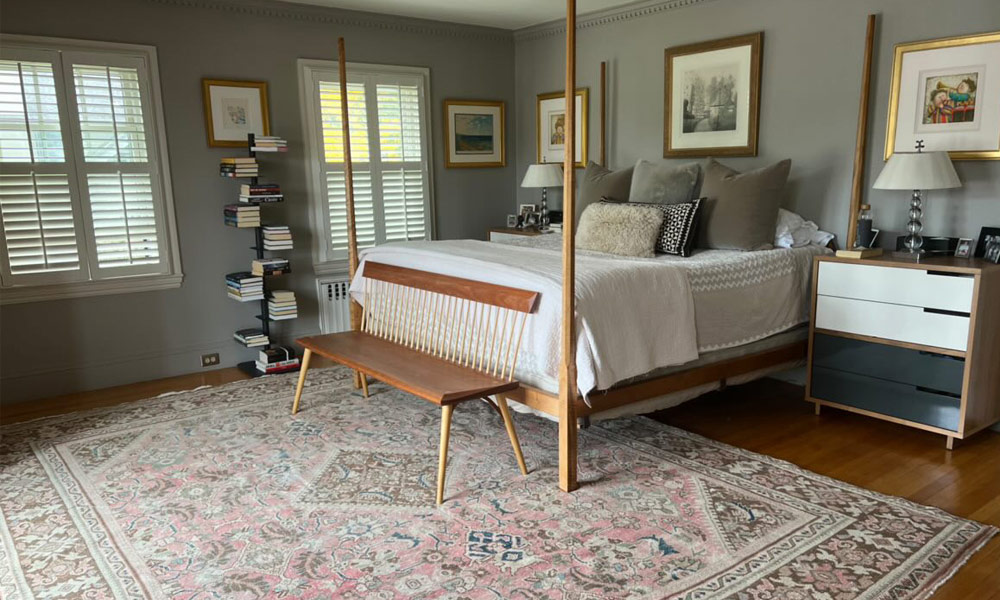
Above: Notice how the rug extends comfortably under the bed and bench, creating warmth without crowding the narrow walkways—ideal for small bedrooms with side tables.
Option 2: Rugs Beside the Bed (Runners or Small Accent Pieces)
Sometimes the smartest move is to skip the big under-bed rug entirely. Two matching runners placed on either side of the bed offer the plush feeling where you need it most—right where your feet hit the floor—while keeping the center of the room open and airy.
This approach shines in humid coastal cities or dustier urban areas where frequent cleaning matters. Runners are lighter, easier to roll up and shake out on the balcony, and they highlight beautiful flooring instead of covering it. In a small bedroom, they can visually stretch the space, especially if you pick narrow strips in striped or geometric patterns inspired by traditional Pakistani textiles.
Many homeowners love layering a slim jute runner beside the bed with a smaller decorative piece near the door or wardrobe. It adds texture without commitment. Imagine stepping onto a soft cotton runner each morning while the cool tiles in the middle keep the room feeling spacious and breezy during Lahore’s hot summers.
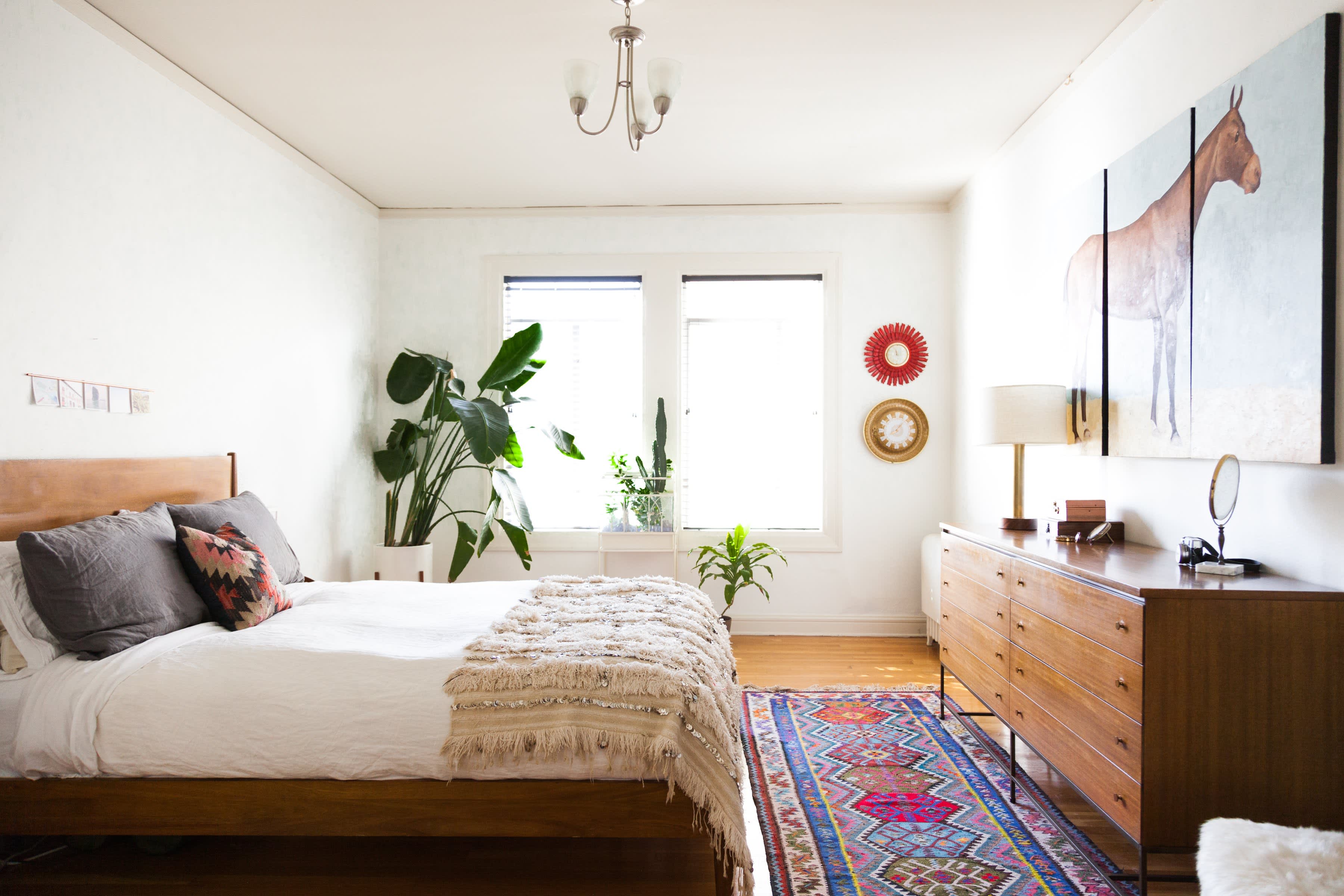
Above: Bedside runners create a cozy path without dominating the floor—perfect when every inch counts in a compact layout.
Hybrid Ideas That Work Wonders in Tiny Spaces
Why choose just one? Some of the most creative small-bedroom setups combine both. Place a larger rug partially under the foot of the bed and add slim runners on the sides for the best of both worlds. Or use a single oversized flat-weave that covers the lower half of the bed and extends into a bedside area—great for rooms that also serve as reading nooks.
In Pakistani homes, layering is popular and practical. A neutral jute base rug under the bed with a smaller patterned dhurrie runner beside it adds depth and makes swapping seasonal pieces simple. During winter, bring out warmer-toned accents; in summer, switch to lighter weaves that feel fresh.
Above: A mix of jute and smaller accent rugs beside and at the foot of the bed keeps the space open yet inviting—very doable with local market finds.
Choosing the Right Rug for Pakistani Small Homes
Local options make this decision easier and more budget-friendly. Dhurrie rugs—woven right here in Pakistan—are lightweight, durable, and easy to maintain. Their flat weave handles dust well and rolls away quickly when you need to mop the tiles. Jute and cotton blends offer natural texture that pairs beautifully with wooden charpoys or simple metal beds sold in every neighborhood market.
Stick to neutral or softly patterned designs in beige, sage green, or warm terracotta. These tones complement the pale walls and vibrant cushions typical in Pakistani interiors without making the room feel smaller. Avoid thick pile carpets that trap heat and dust; low-profile weaves breathe better in our climate.
Size-wise, measure first. In a queen-bed room, look for something around 5×8 feet or larger if going under-bed. For runners, 2×6 or 2×8 feet usually fit perfectly beside standard beds. Shop at local bazaars or trusted online sellers who offer reversible or machine-washable pieces—practical for busy households.

Above: A simple dhurrie-style rug brings subtle pattern and texture without overwhelming a small space—classic yet contemporary.
Styling and Everyday Maintenance Tips
Keep the look cohesive by matching rug tones to your curtains or bed linen. Add a small stool or low bench at the foot of the bed if space allows—it doubles as extra seating while protecting the rug edge. In narrow rooms, vertical stripes on runners can make walls feel farther apart.
Maintenance is straightforward in Pakistani homes. Shake out runners weekly on the balcony, vacuum under-bed sections monthly, and spot-clean spills immediately. Many families rotate their rugs seasonally to even out wear—smart and cost-effective.

Above: A jute runner beside the bed adds natural warmth and texture—easy to style and maintain in everyday small-home living.
Final Thoughts on Making the Choice
In the end, there’s no single right answer for every small bedroom in Pakistan. Some days you want the full grounded feel of a rug under the bed; other times the lightness of bedside runners simply works better with your routine and layout. The beauty lies in experimenting—start with what you already own, measure your space, and adjust as your home evolves.
Whether you go under, beside, or a clever mix, the right rug turns a compact bedroom into a personal sanctuary. It’s one of those small-home decisions that quietly makes daily life a little softer and more stylish. Next time you rearrange, try one of these ideas and see how the room feels different—chances are you’ll wonder why you didn’t try it sooner.