
Living in a small home in Pakistan often means every corner has to work harder. Your study room might be a converted balcony, the corner of the drawing room, or even part of the kids’ bedroom. When it comes to lighting, the choice between warm light and cool light isn’t just about looks—it shapes how the space feels during long study hours, evening tuition sessions, or late-night work from home. In compact Pakistani homes, where natural light can be limited by narrow streets or high boundary walls, getting this decision right makes the room feel more welcoming and functional without spending a fortune.
I’ve helped many families in Lahore, Karachi, and Islamabad rethink their small-home lighting, and the warm-versus-cool debate always comes up. Let’s walk through it simply, like a friendly chat over chai, so you can decide what suits your space best.
What Do Warm and Cool Light Actually Mean?
Think of light like the temperature of sunlight at different times of day. Warm light sits around 2700K to 3000K on the Kelvin scale—it has a soft, yellowish glow that reminds you of sunset or old tungsten bulbs. Cool light, on the other hand, ranges from 4000K to 6500K and gives a crisp, bright white or slightly bluish tone, closer to midday sun or modern LED tube lights.
In small Pakistani homes, you’ll find both easily at any electric store or online on Daraz and local markets. Warm bulbs feel familiar because many older homes still use them in bedrooms and sitting areas. Cool LEDs have become popular in the last few years because they pair well with the white or off-white paint most of us choose to make tight spaces look airier.
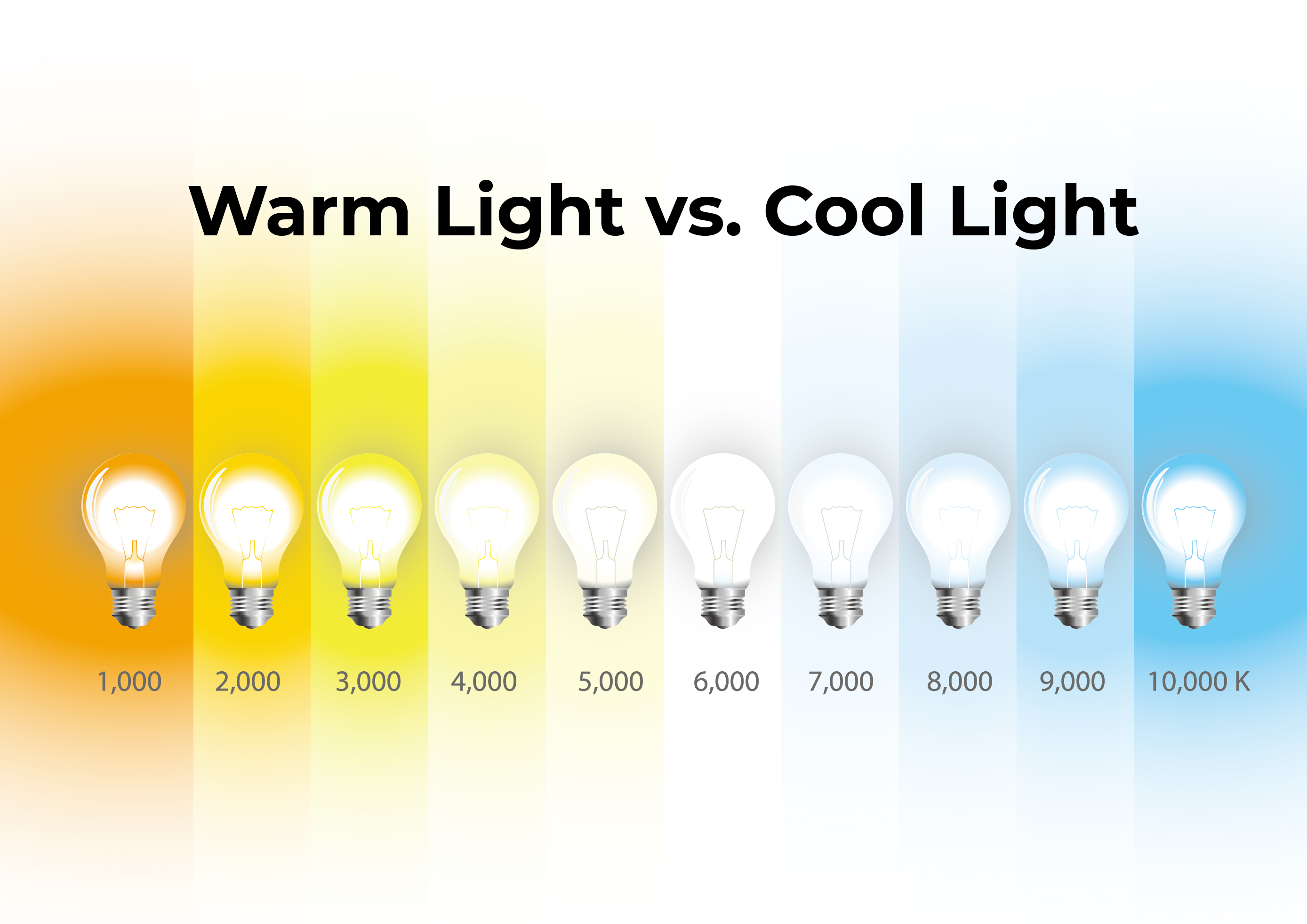
Warm Light vs. Cool Light: Which One to Choose?
A simple visual like this comparison chart helps you picture the difference right away—no fancy tools needed.
Warm Light: The Cozy Companion for Evening Study Corners
Warm light wraps the room in a gentle embrace. In a small study area tucked next to the TV cabinet or under a low ceiling, it softens shadows and makes the walls feel closer in a comforting way. Many families in multistory houses in Rawalpindi or Faisalabad prefer it for late-evening revision because the yellow tone feels less harsh when the rest of the house is winding down.
Imagine a wooden study table inherited from your parents, paired with a simple desk lamp throwing warm light onto textbooks. The pages look richer, and the whole corner takes on a homely vibe that encourages you to sit a little longer. In small homes where the study area shares space with family activities, warm light blends beautifully with the rest of the décor—think beige curtains, wooden shelves, and family photos.
One common setup I see works well: a warm ceiling bulb for overall glow plus a warm desk lamp for the actual reading spot. It creates pockets of light without making the tiny room feel like a hospital waiting area.
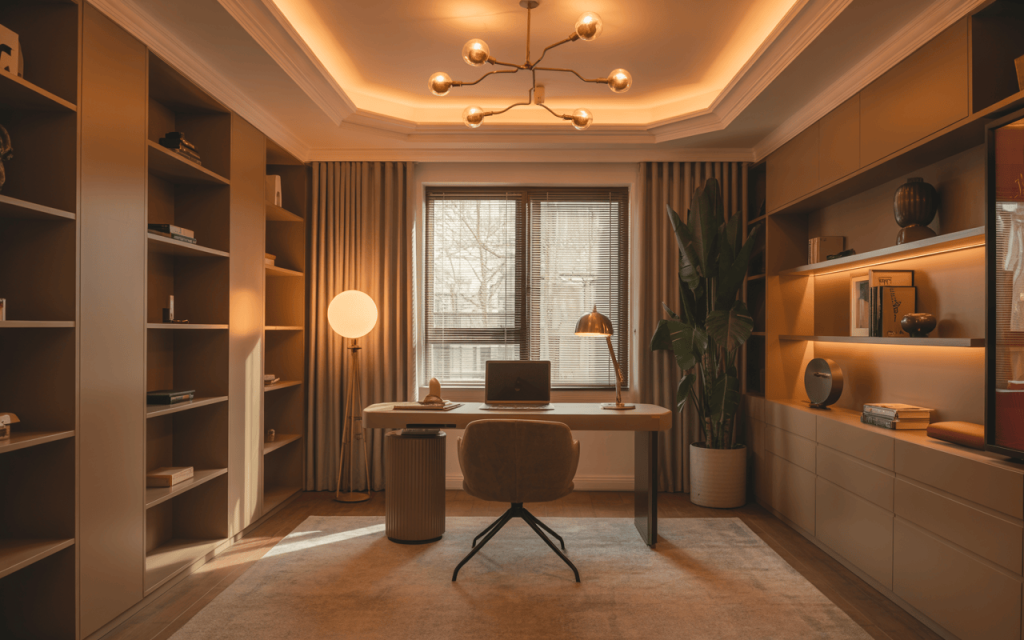
Home Office Designs That Boost Focus and Work Efficiency
This kind of warm-lit study corner in a compact space shows how the light can make even a modest desk feel inviting and personal.
Cool Light: The Crisp Choice for Daylight-Like Clarity
Cool light, by contrast, makes everything pop. In small homes with limited windows—common in new apartment blocks in DHA or Bahria Town—it mimics bright natural daylight and helps the room feel more open. The white tone bounces off light-coloured walls and tiled floors, which many Pakistani families choose precisely because they make 8×10 ft rooms look bigger.
If your study routine involves detailed work like board exam prep, online classes, or office tasks on a laptop, cool light keeps the space feeling fresh and alert. You’ll notice colours on maps or diagrams appear sharper, and the desk surface looks cleaner. Many new small homes now come with cool LED panel lights already installed because they pair well with the minimalist furniture trends popular in urban Pakistan.
A practical tip for tight spaces: use cool light on the main ceiling fixture and pair it with a neutral or slightly warm task lamp. This way the room doesn’t feel cold, but the study area stays bright where it counts.
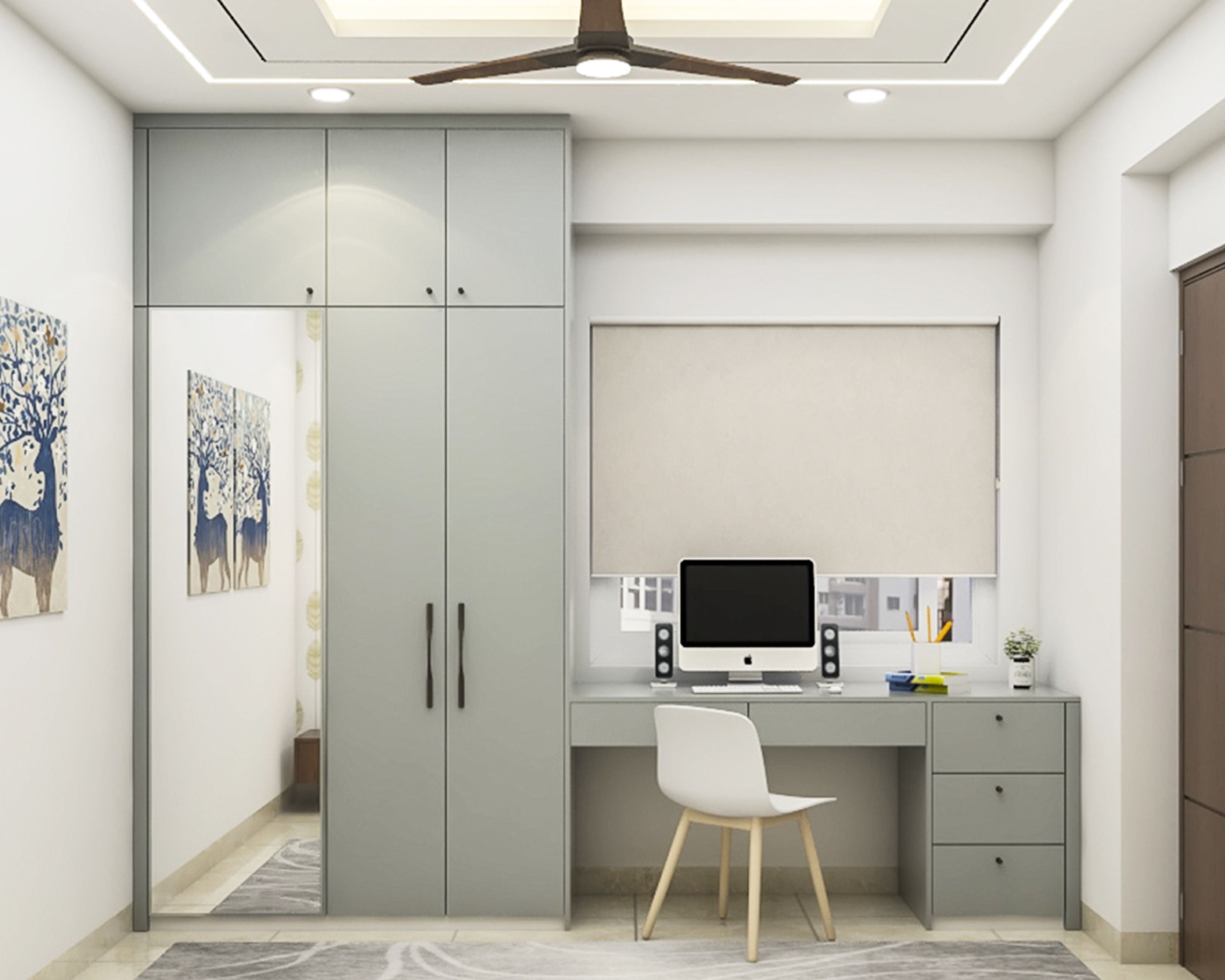
Study Room Design Ideas | Modern And Functional Study Spaces – Livspace
Modern small-home study setups like this one use cool overhead lighting to open up the space while keeping the desk area focused.
Why Small Homes in Pakistan Make This Choice Extra Important
In Pakistan, small homes come with their own realities. Loadshedding still happens in many areas, so families often rely on inverters and energy-saving LEDs. Cool lights tend to feel more efficient in bright daytime use, while warm ones create a softer evening mood when power might be limited. Natural light plays a big role too—afternoon sun pouring through a small window in a Karachi flat can clash with cool bulbs if you’re not careful, turning the room yellowish.
Space perception matters hugely. Cool light can make a narrow study nook feel wider because it reduces warm shadows. Warm light, however, makes the same space feel snug and personal, perfect when the room doubles as a quiet corner for prayer or family chats after study time.
Many families also consider paint and furniture colours. If your walls are light pastel (a favourite in small Pakistani interiors), cool light keeps the room looking fresh. If you have darker wood tones or traditional rugs, warm light brings out their richness without making the space feel smaller.
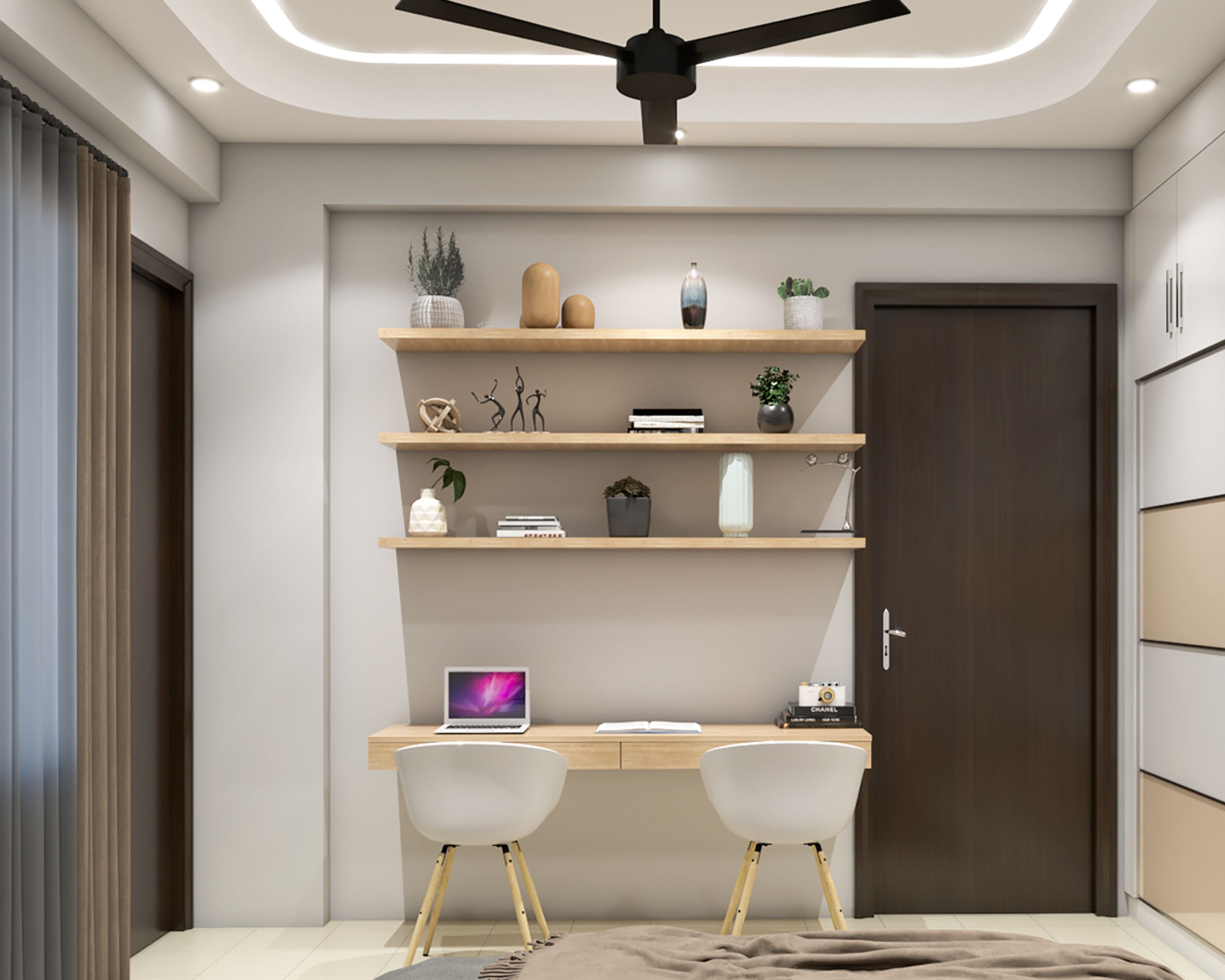
Study Room Design Ideas | Modern And Functional Study Spaces – Livspace
This clean, compact study area shows how thoughtful lighting choices work with typical small-home layouts across Pakistan.
Layered Lighting: The Smart Small-Home Solution
The real magic in small Pakistani homes happens when you layer lights instead of picking just one type. Start with a main ceiling light (cool for openness or warm for comfort), add a desk lamp for task work, and throw in a small wall sconce or strip light for ambience. This approach is budget-friendly and works beautifully in multi-purpose rooms.
Try this combination many families love: a cool 4000K ceiling panel for general brightness during the day, a warm 3000K desk lamp for evening focus, and perhaps a string of fairy lights on the shelf for that homely touch. It costs little extra and lets you switch moods as the day changes.
Everyday Decisions That Fit Pakistani Budgets and Lifestyles
You don’t need expensive smart bulbs. Local brands offer good-quality LEDs in both warm and cool tones at reasonable prices. Check wattage—9W to 12W bulbs are plenty for small study corners and keep electricity bills manageable. Look for bulbs marked “daylight” for cool and “warm white” for the yellow tone; they’re available everywhere from local markets to big stores.
If your home has frequent power cuts, choose bulbs that work well with inverters. Many families mix one cool and one warm bulb in the same fitting using a simple double-holder setup. It’s a classic Pakistani hack that gives flexibility without fancy dimmers.
Common Mistakes to Skip in Small Spaces
Avoid flooding a tiny study corner with only cool light—it can feel stark against colourful Pakistani textiles or family photos. On the flip side, too much warm light in a windowless room can make it feel dim and closed-in. Always test both options with the actual furniture in place before committing. And remember, one size doesn’t fit all—some teenagers prefer cool light for their competitive exam prep, while parents doing accounts work might enjoy a warmer glow.
Make the Choice That Feels Right for Your Home
In the end, there’s no single “best” light for every study room in Pakistan’s small homes. Warm light brings comfort and a sense of togetherness in spaces shared by the whole family. Cool light opens up the room and keeps things feeling bright and organised when every inch counts.
Take a weekend afternoon, switch on both types in your study corner, and sit there with your books or laptop. Notice how the room feels different at different times of day. That personal test, combined with the practical realities of small-home living in Pakistan, will guide you better than any rule.
Lighting is one of the easiest and most affordable ways to make your small home work smarter. Whether you lean warm for that cosy evening vibe or cool for crisp daytime clarity, the right choice turns your study corner from just another space into a place where focus comes naturally and the family feels at home.